Free Things to Do in Werribee
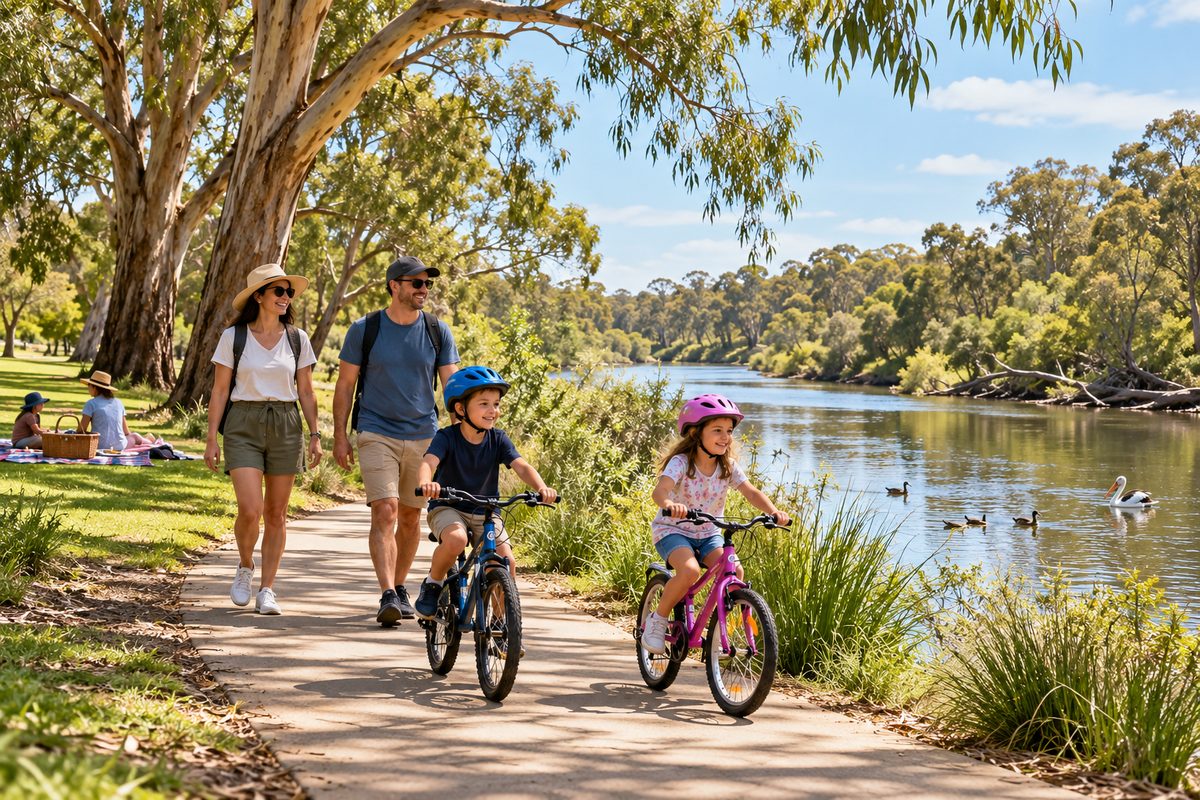
The best free things in Werribee are its wetlands, river, beach and gardens, and the top pick is birdwatching at the Western Treatment Plant with a free permit. Most people come for the paid zoo. I think that's backwards. The free spots here give you more of what your brain needs, and they cost nothing.
This guide covers the free things to do in werribee that are worth your time, the order I'd do them in, and the science on why time outdoors pays off. Werribee sits in the City of Wyndham, about 30 to 40 minutes west of Melbourne by car or train.
Why are the free spots better than the paid ones?
Free places let you stay as long as you want, and that changes how you feel. When I pay for entry, I rush. I try to "get my money's worth" and I end up tired and wired. When nothing is on the clock, I slow down and my stress drops.
The research backs this up. A 2019 study in Scientific Reports looked at about 20,000 people in England. People who spent at least 120 minutes a week in nature reported better health and wellbeing than people who spent none. Below 120 minutes, the benefit didn't show up. So the goal is time, not a ticket.
Here's my first left of center idea. Werribee is not a zoo town. It's a wetland town. Some of the most important bird habitat in Australia sits right on its edge, and almost nobody local knows it.
What makes the Western Treatment Plant worth a visit?
The Western Treatment Plant is a working sewage plant run by Melbourne Water, and it's one of the best birdwatching sites in the country. That sounds strange. It isn't. The treated water ponds feed huge numbers of birds.
The facts are simple.
- The site covers around 10,500 hectares of land along Port Phillip Bay.
- Birders have recorded more than 280 bird species there.
- Its wetlands are protected under the Ramsar Convention, an international treaty signed in 1971 to protect wetlands that matter to the world.
- Entry for birdwatching needs a permit from Melbourne Water, and the permit is free.
What I saw on my first trip was flocks of shorebirds that fly here from Siberia and Alaska each spring. They travel more than 10,000 kilometres and land in a pond next to a sewage works. That shift in view sticks with you.
My second left of center idea. Birdwatching is focus training. You scan wide for movement, then lock in on one bird. Wide vision calms the stress system, and tight focus trains attention. You do both, over and over, for an hour. I found this was better for my head than any app.
How do you get the most out of it?
- Apply for the free permit online before you go. Allow time for it to arrive.
- Go in the first two hours after sunrise or the last two before sunset, when birds feed.
- Bring binoculars. Even cheap ones work.
- Stay in your car on the tracks when birds are close. A car acts like a hide.
- Pack water and food. There are no shops inside.
Where can you see wetland birds without a permit?
Cheetham Wetlands at Point Cook is the easy option. It's an old salt works that now forms part of the same Ramsar protected zone. You can walk in, no permit needed.
It works like a nature reserve with paths, viewing spots and open water. In my experience it's a good "first wetland" for kids or for anyone not sure they'll like birdwatching. If you enjoy an hour there, book the Western Treatment Plant permit next.
Why do these wetlands matter so much? Wetlands catch and clean water, slow floods and feed migrating birds. The Ramsar Convention lists sites that hold large bird numbers or rare species. A Ramsar listing tells you this spot is a real habitat, not a pretty pond.
What can you do at Werribee Park for free?
You can walk the grounds, picnic on the lawns and visit the Victoria State Rose Garden, all for free. The mansion tours and the zoo next door cost money. The gardens don't.
Werribee Park was a grand pastoral estate built in the 1870s. Today the open lawns and the river frontage are the draw. The rose garden holds thousands of roses, and it peaks in late spring around November and again in autumn.
When I tried going on a weekday morning, I had big parts of the lawn to myself. Weekends get busy with families and weddings. Go early.
What should you do there?
- Walk through the rose garden first while the air is cool.
- Find the path down toward the Werribee River for shade and quiet.
- Bring a picnic and eat on the lawn. No booking needed.
- Look for kangaroos and birds on the open paddocks near the edges.
Is the river worth a walk if you're short on time?
Yes. The Werribee River Trail runs through town, and you can walk a short loop in 30 minutes. It's flat, shared with bikes, and easy for most people.
We already have a full Werribee River Walking Trail Guide on this site, so I'll keep this short. My advice is to treat the river as your "daily" free spot and the wetlands as your "weekly" free spot.
Why walk by water? A 2015 Stanford study in PNAS had people walk 90 minutes in a natural setting or next to a busy road. The nature group showed less rumination, which means fewer looping negative thoughts. Brain scans also showed lower activity in an area tied to those thoughts. The road group got no such drop.
Walking also creates what scientists call optic flow, the way the world streams past your eyes as you move forward. I've talked about this a lot. Forward motion with a wide view appears to quiet the brain's threat circuits. A river path gives you that, plus moving water and birds.
Where else along the river?
Werribee River Park sits further down toward the coast. It's a big open stretch of grassland and river flats with walking tracks and picnic areas. It feels wilder than the town section, and it's a good link between the town and the beach.
Which free beach should you pick?
Werribee South Beach is the one to choose. It sits on Port Phillip Bay, the water is shallow and calm, and on a clear day you can see the Melbourne skyline across the bay.
Werribee South is a small coastal area known for market gardens and the boat ramp. The beach is free, parking is free, and it rarely gets as crowded as the Melbourne bayside beaches.
I found this was the best spot for morning light. Getting sunlight in your eyes within an hour of waking helps set your body clock. On a clear morning you need about 5 to 10 minutes. On a cloudy day, aim for 20 to 30. Do it without sunglasses, and never look straight at the sun. A beach facing open water gives you a huge bright sky to look at.
What to do at the beach
- Walk the shoreline at low tide and look for crabs and shells.
- Watch boats launch from the ramp.
- Swim in summer when the water warms up. Check for warning signs after heavy rain.
- Bring a hat and sunscreen. There's little shade.
Where can kids burn energy for free?
Parks with open space and climbing gear work best. Chirnside Park, near the centre of Werribee, has big grass areas and sports grounds that kids can run across. Pair it with the river path for a full morning.
When you choose a playground, look for an adventure playground with nets, tall climbing frames and balance gear rather than a small toddler set. Kids need risk they can manage. Research on "risky play" shows that climbing and balancing help kids build confidence and judge danger better. In my experience a big climbing structure buys you an hour. A small one buys you ten minutes.
Our separate Things to Do in Werribee with Kids article goes deeper on family days, so use that if you have little ones.
What free things can you do when it rains?
Head to Werribee Library. Membership through Wyndham City Libraries is free, and you get books, quiet desks, free wifi and kids' sessions like story time.
I use libraries as a reset when the weather turns. Reading on paper pulls your focus onto one thing. That's the same skill birdwatching trains. Check the library's events page, because many talks and kids' programs cost nothing.
Other rainy day options
- Borrow a field guide on Australian birds before your wetland trip.
- Use the free computers to apply for your Western Treatment Plant permit.
- Bring kids for free school holiday programs, which often fill fast.
How do you get around without spending money?
Take the train. Werribee station sits at the end of the Werribee line, and from there the town centre, the river and Chirnside Park are a short walk.
Don't confuse it with Werribee Racecourse railway station. That old station only served race meeting days and no longer runs regular trains, so it won't help you on a normal visit.
For Werribee Park, the beach and the wetlands, you'll want a car or a bike. The distances are too long for most people to walk in a day. A bike also gives you more optic flow and more time outside, which is the whole point.
How should you plan a free day in Werribee?
Start with light and water, finish with shade and food. Here's the plan I use.
- Sunrise. Werribee South Beach for 10 to 20 minutes of morning light and a shoreline walk.
- Early morning. Drive to Cheetham Wetlands or the Western Treatment Plant while birds are feeding. Stay one to two hours.
- Late morning. Werribee Park for the rose garden and a picnic lunch on the lawn.
- Afternoon. A short loop of the Werribee River Trail, or let kids loose at Chirnside Park.
- If it rains. Swap the afternoon for Werribee Library.
That day adds up to well over 120 minutes in nature, which hits the weekly target from the Scientific Reports study in one go.
Should you see everything or repeat one spot?
Repeat one spot. This is my third left of center idea. Most guides push you to tick off a list. I think you get more by going back to the same wetland or river bend every week.
When I tried this, I started to notice small changes. Which birds arrived in spring. When the water rose. Where the kangaroos fed. Your brain rewards you for spotting change, and that only happens when you know a place well. A list gives you novelty once. A repeat visit gives you a skill.
Pick one free place from this guide. Go weekly for a month. Then decide if you need anything else.