Werribee Open Range Zoo Visitor Guide
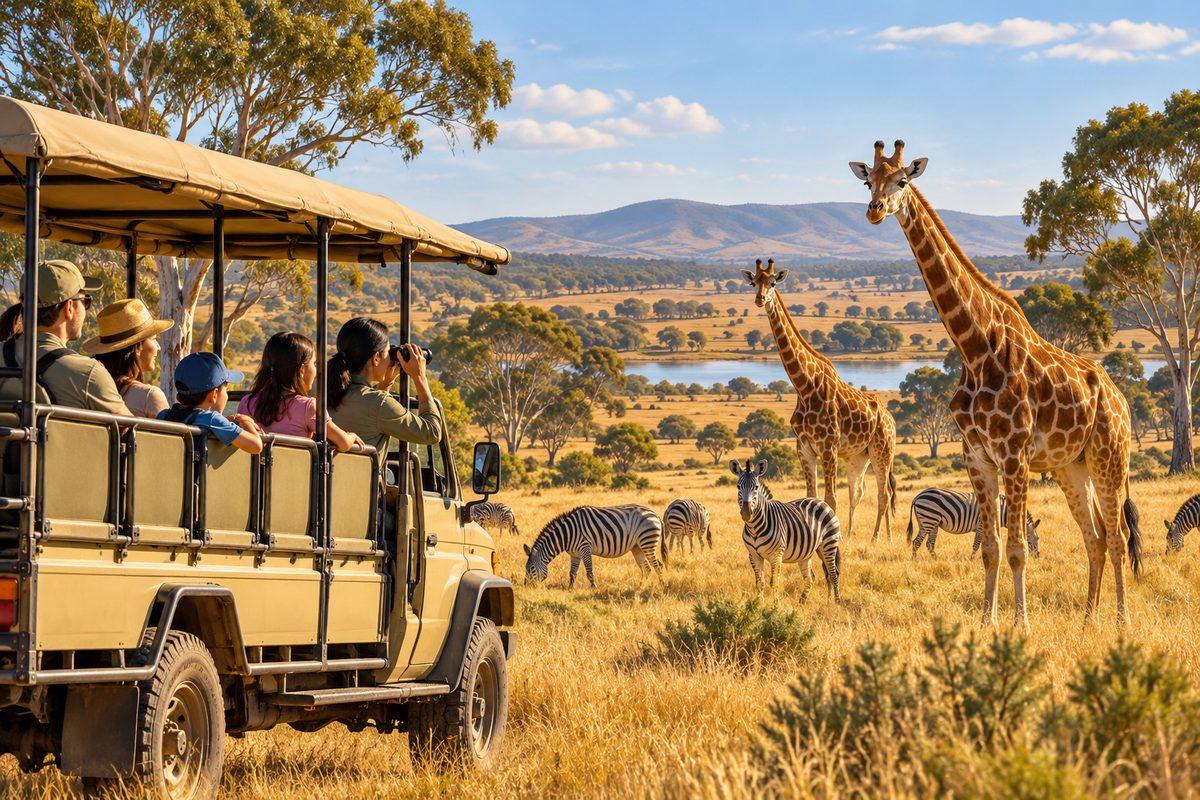
Arrive at 9am on a cool weekday, take the train or drive the Princes Freeway, walk the trails first and book the safari bus for late morning. That one plan fixes most of the problems people run into at this zoo. Werribee Open Range Zoo covers about 225 hectares of grassland beside the Werribee River, around 32 km southwest of Melbourne. It is a safari park, not a city zoo, so the rules that work at a small zoo do not work here. This werribee open range zoo visitor guide gives you the timing, transport and animal tips that make the day work.
How is this zoo different from Melbourne Zoo?
Werribee is built around big open paddocks and herds of grazing animals. Melbourne Zoo packs many small exhibits into a tight space in Parkville. Healesville Sanctuary focuses on Australian native wildlife. All three are run by Zoos Victoria, and one membership gets you into all of them.
In my experience, people show up at Werribee expecting to see an animal every 30 seconds. That is not how it works. The animals have room to move away from you, and they do. What I saw was that the visitors who enjoyed it most treated it like a long walk in the sun with animals along the way, not a checklist.
- Melbourne Zoo suits short visits and small children who tire fast.
- Healesville Sanctuary suits people who want koalas, platypus and birds of prey.
- Werribee suits people who want large African and Asian grazers, a bus safari and a lot of walking.
What time should you get there?
Get there when the gates open at 9am. The zoo is open every day of the year, from 9am to 5pm.
Here is the reason. Most large grazers and predators are crepuscular, which means they are most active around dawn and dusk. By midday on a warm day, lions, cheetahs and rhinos lie flat in the shade and barely move. Morning is your best window.
When I tried a 1pm arrival on a 30 degree day, I saw lions sleeping and not much else. A 9am arrival on a mild morning gave me lions pacing and calling. Same zoo, completely different day.
Pick a cool or cloudy day
This is the idea most guides miss. People wait for a sunny day to visit. I found that this was backwards. Overcast days between 14 and 22 degrees keep the animals up and moving for longer, and the open paths stay comfortable for you too. There is very little shade on the walking trails, so a hot day drains you as fast as it drains the animals.
Should you do the safari bus first or last?
Do the walking trails first and the safari second. Most people rush straight to the bus at opening, so the first tours fill up and the trails sit nearly empty.
The safari tour is included with your entry ticket. It runs for about 40 to 45 minutes and takes you through the open plains where the hoofed animals roam together. You cannot walk into these areas, so the bus is the only way to see them up close.
- Walk the trails from 9am to about 11am while predators are active.
- Book or line up for a late morning safari.
- Eat lunch near the main visitor area.
- Use the afternoon for anything you missed, or head home before the heat peaks.
What I saw was that the herd animals on the plains stay visible all day because they graze in the open. The predators on the walking trails are the ones that disappear after midday. So spend your best morning hours on the animals that hide.
Which animals are worth finding?
Focus on five species. They give you the most to see and the best stories to tell your kids.
Southern white rhinoceros
The Southern white rhinoceros is the big draw. In the late 1800s, hunting cut this subspecies down to somewhere between 20 and 100 animals in South Africa. Strong protection brought it back to roughly 16,000 today, according to the International Union for Conservation of Nature. That number still drops whenever poaching spikes. When you watch a White rhinoceros graze from the bus, you are looking at one of the clearest comebacks in modern wildlife conservation.
A quick fact to share with kids. The name white rhinoceros likely has nothing to do with colour. Many sources trace it to the wide, flat lip it uses to crop grass.
Przewalski's horse
Przewalski's horse was declared extinct in the wild in the 1960s. Every one alive today comes from a small group bred in zoos. Zoo programs released horses back into Mongolia from the 1990s, and the species improved from extinct in the wild to endangered. In my experience, this is the animal that changes how people think about zoos. Without captive breeding there would be no wild herds at all.
African wild dog
The African wild dog is endangered, with only around 6,600 left in the wild across Africa. They hunt in packs and have one of the highest hunting success rates of any predator. Watch for them in the morning. I found that this was the species most likely to be asleep and out of sight after lunch.
Common eland
The Common eland is the largest antelope in the world. Bulls can weigh close to 900 kg. You will see them on the safari plains mixed in with zebra and giraffe. They look calm and slow, yet they can jump well over a metre and a half from a standing start.
Lions, hippos and cheetahs
The lion area, hippo pools along the Werribee River and the cheetah enclosure fill out the walking trails. The hippos sit in water most of the day, so they stay easy to spot even when other animals hide.
How do you get there without wasting time?
Driving is fastest. Take the Princes Freeway west from Melbourne, exit at Werribee and follow signs to Werribee Park. The trip takes about 35 to 45 minutes from the city outside peak hour. Parking is free.
Public transport works well and I prefer it. Take a Werribee line train to Werribee railway station, then catch bus 439, which runs to the zoo entrance at Werribee Park. Check the timetable first, because the bus does not run as often on Sundays and public holidays.
Here is my left of center take. Take the train even if you own a car. You get a short walk at each end, you skip the freeway traffic coming home at 5pm and nobody has to drive tired after a full day on their feet. When I tried it with a family group, the train ride home was the calmest part of the day.
How long should you plan to stay?
Plan four to five hours. That covers the trails, one safari and a meal break without rushing.
The walking circuit runs a few kilometres, and most people log 8,000 to 12,000 steps over a visit. Wear proper walking shoes. Bring water, a hat and sunscreen, because the open ground gives you full sun exposure. That sun is useful in the morning. Bright outdoor light early in the day helps set your body clock, and a zoo trip is an easy way to get a big dose of it.
What to pack
- A refillable water bottle for each person.
- A wide brim hat and sunscreen.
- Binoculars, because animals on the plains often sit far away.
- A light jacket, since the western plains get windy even on mild days.
- Snacks for kids between meals.
How can you save money on tickets?
Children under 16 enter free on weekends, Victorian public holidays and Victorian school holidays. This is a Zoos Victoria rule across all three of its sites. If you have kids, visit on those days and you only pay for adults.
A Zoos Victoria membership pays for itself after two or three visits a year. It covers Werribee, Melbourne Zoo and Healesville Sanctuary. In my experience, families who buy a membership visit more often and stay for shorter trips, which beats one long exhausting day.
Buy tickets online before you go. Prices and booking rules change, so check the official Zoos Victoria site for the current adult price and any safari booking slots.
What else can you do nearby on the same day?
The zoo sits inside the Werribee Park precinct, so you can stack activities without moving the car.
- Werribee Park Mansion and its formal gardens sit a short walk from the zoo gates.
- The State Rose Garden is free and blooms best from late spring to autumn.
- The Werribee River trail runs past the precinct for an easy walk after the zoo.
- On a winter weekend, catch a Werribee Football Club match in the VFL to finish the day locally.
What I saw was that people who tried to fit the mansion, the zoo and the gardens into one day ended up rushing all three. Pick the zoo plus one other stop. That is plenty.
Does visiting actually help wildlife?
Yes. Part of your ticket price funds Zoos Victoria conservation programs. These programs breed threatened species and fund field work in the wild.
The evidence is clear with Przewalski's horse. Zoo breeding kept the species alive after it vanished from the wild, and released zoo bred horses now live in Mongolia. The same model supports breeding programs for the Southern white rhinoceros and the African wild dog across zoos worldwide. Zoos share animals between countries to keep the gene pool healthy, which a single small population cannot do alone.
I think the most useful thing a visitor can do is pay attention to the keeper talks. They are short, free with entry and give you facts you will not get from a sign. When I sat through a keeper talk, I learned more in ten minutes than in an hour of reading boards.
What mistakes do first time visitors make?
- Arriving at midday when the predators are asleep.
- Choosing the hottest day of the week.
- Rushing to the safari bus first and missing the active animals on the trails.
- Wearing sandals for a walk of several kilometres.
- Forgetting binoculars and squinting at distant herds.
- Trying to see the whole Werribee Park precinct in one day.
Fix those six things and your visit gets far better. Get there early, pick a mild day, walk first, ride the bus second and leave before the heat sets in.