Werribee Park Mansion Visitor Guide
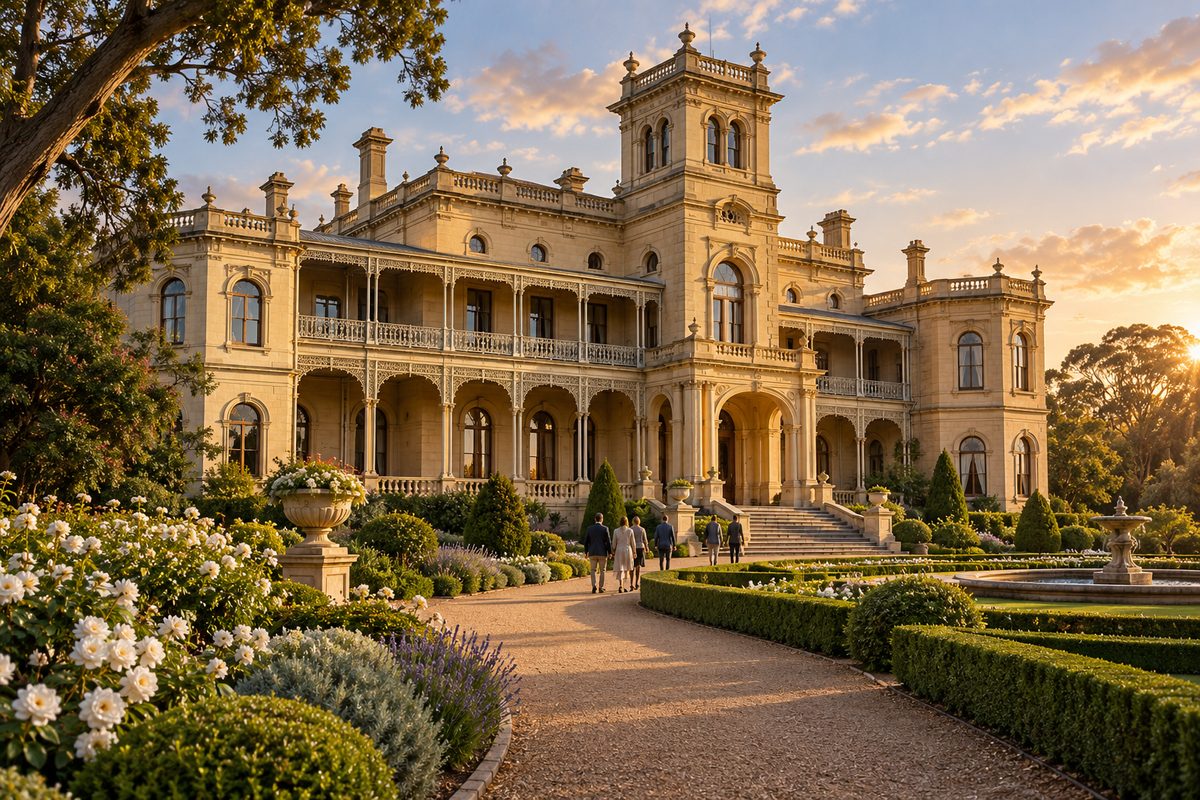
Plan about two hours for Werribee Park Mansion, go on a weekday morning, and walk the house from the back service rooms forward to the grand front rooms. That one change in order makes the house make sense. Most people do the opposite. They see the shiny rooms first, get tired, and rush past the parts that explain how the place ran.
This werribee park mansion visitor guide is built around one goal. You should leave knowing how a 60 room house worked day to day, not just what the curtains looked like. In my experience, that is what sticks with people a week later.
What exactly are you walking into?
Werribee Park Mansion is a large Italianate house built between 1874 and 1877 for the Chirnside family. Thomas and Andrew Chirnside were Scottish brothers who made their money from sheep and cattle across the Western District and the Werribee plains. Andrew Chirnside and his family lived in the house, and it became the centre of a huge farming estate.
Italianate architecture means a style copied from Italian country villas. Look for the square tower, the low roof, the tall arched windows and the heavy brackets under the eaves. Once you know those four features, you will spot the style all over old Melbourne.
The house sits in Victoria (state), Australia, about 35 kilometres southwest of Melbourne. The state government bought the estate in the 1970s, and today Parks Victoria runs the mansion and the grounds. The grounds are free to walk. The mansion itself has a small entry fee, so check the current price and hours on the Parks Victoria website before you leave home.
How do you get there without wasting half the day?
Driving is the fastest option. From Melbourne, take the Princes Freeway west and follow the Werribee Park signs onto K Road. With normal traffic the drive takes 35 to 45 minutes. Parking is free and close to the house.
By public transport, catch a Werribee line train to Werribee railway station, then take a local bus toward Werribee South that stops at Werribee Park. Buses do not run often, and on weekends the gaps get longer. When I tried this route on a Sunday, I waited longer for the bus than I spent on the train. If you go by public transport, check the bus timetable first and build your day around the return bus, not the arrival.
- Car from the city takes 35 to 45 minutes via the Princes Freeway.
- Train to Werribee railway station takes about 35 minutes from Southern Cross.
- The bus from the station to the park adds roughly 15 minutes plus waiting time.
- A taxi or rideshare from the station costs little and saves the wait.
When should you go for the best visit?
Go on a weekday morning, ideally soon after opening. The rooms are narrow in places, and when a tour group comes through you lose the quiet that lets you notice details. What I saw on weekend afternoons was crowding in the main hall and the staircase, and people moving through in a slow line.
Here is a less common take. Winter is a great time to visit the mansion. The house was built to be lived in indoors, with fireplaces in nearly every main room. On a cold grey day the rooms feel like they were meant to feel. Summer is better for the gardens, but if the house is your main reason for coming, pick a cool weekday.
Morning visits help your brain too. Bright light early in the day lifts alertness and sets your body clock, and research on circadian rhythm keeps confirming that. Walking the grounds in morning light before going inside means you arrive at the house awake and paying attention.
Which rooms deserve most of your time?
Not every room earns equal time. I found that people spend far too long in the front rooms and skim the rooms that tell the real story. Here is where I put my attention, in order.
- The servants' quarters. This is where the house ran. Small bedrooms, plain walls and steep back stairs show you how many people it took to keep one family comfortable.
- The kitchen and laundry. Look at the size of the stove and the tubs. Every meal and every shirt came through these rooms by hand.
- The billiard room. This was the men's room after dinner. It tells you about social rules of the time, who could go where, and when.
- The dining room. Notice how close it sits to the service areas. Food had to arrive hot, and the layout solved that.
- The main staircase and hall. This is the showpiece. Enjoy it, but you do not need more than a few minutes here.
- The tower view. If it is open on your visit, go up. You see how flat the land is and why the family could watch their whole estate from one spot.
Why start at the back of the house?
Start at the back because the service wing explains everything you see at the front. When you see the bell system and the back stairs first, the grand rooms stop being pretty boxes. You start asking how the fire got lit, who carried the coal, and how many trips the maid made each day.
When I first visited, I did it the normal way. Front door, drawing room, dining room, upstairs, then the servants' quarters last. By the time I reached the back I was tired and skimmed it. The next time I reversed the order. The front rooms felt completely different, because I could see the hidden work behind them.
This works because of how memory forms. We remember things better when they connect to a reason or a story, and the service rooms give you that story. A fancy fireplace means more once you have seen the coal store.
How long should you spend inside the house?
Spend 60 to 75 minutes inside, then go outside. Do not push past 90 minutes.
Museum researchers have studied this for over a hundred years. Benjamin Gilman described museum fatigue in 1916, and later work by Stephen Bitgood found that visitor attention drops sharply after about 20 to 30 minutes of looking at displays. People start reading less, stopping less, and walking faster. That matches what I see in old houses. The last third of a long visit gets wasted.
So the fix is simple. See your top rooms first, while your attention is fresh. That is another reason to begin with the service wing. If you spend your best focus on the parts that matter most, it does not matter if you skim the last bedroom upstairs.
What should you do in the grounds after the house?
Walk the formal gardens, then head toward the Werribee River. The gardens near the house have an ornamental lake, a grotto and big old trees. The Victoria State Rose Garden also sits within the park and is free. Roses peak from November through autumn.
The river walk is the part most visitors skip, and I think that is a mistake. The Werribee River curves along the edge of the estate, and the K Road Cliffs rise above the water nearby. These red and brown cliffs give you a sense of the land the Chirnsides farmed long before the house went up. It is quiet there, and you will often have it to yourself.
There is a good reason to end with a nature walk. A 2015 Stanford study led by Gregory Bratman found that a 90 minute walk in a natural setting lowered rumination, which is that loop of repeated negative thinking. It also reduced activity in a brain region linked to that loop. A walk through urban streets did not do the same. After an hour of reading signs and processing history, a slow walk by the river lets your brain settle and file what you just saw.
What can you pair with the mansion in one day?
Pair the mansion with one other stop, not three. Werribee Park has several neighbours, and it is tempting to cram them all in. What I saw when people tried that was a rushed, tiring day where nothing landed.
- Werribee Open Range Zoo sits right next door. It is the best pick for families. Give it at least three hours, so do the mansion in the morning and the zoo after lunch.
- Shadowfax Winery is a short walk from the mansion. It suits adults who want a slow lunch and a tasting after the house. It pairs well because you have already done the walking.
- Mansion Hotel and Spa is built into the old seminary wing beside the house. Stay the night if you want to see the grounds early before day visitors arrive. That quiet early walk is the best version of this place.
My view is that the winery pairing works best for a first visit by adults. The zoo takes a full afternoon of energy, and after a house visit most people do not have much left. If you have kids, flip it. Do the zoo first while they are fresh, and keep the mansion visit short.
What does a simple two hour plan look like?
- Arrive at opening and park near the house.
- Walk 10 minutes in the formal gardens in morning light.
- Enter the mansion and go straight to the servants' quarters, kitchen and laundry.
- Move to the billiard room and dining room.
- Finish with the main hall, staircase and upstairs rooms.
- Leave the house before the 75 minute mark.
- Walk down toward the Werribee River for 20 to 30 minutes.
- Head to lunch, or start your one paired stop.
What do first time visitors get wrong?
The biggest mistake is treating the mansion like a checklist. People try to read every sign and see every room, then remember almost nothing. Pick your top four rooms and give them real attention.
The second mistake is arriving late in the day. Afternoon light is nice for photos, but you arrive tired, the rooms are busier, and you rush to beat closing time.
The third mistake is skipping the land. The house only exists because of the farm around it. Andrew Chirnside built it to show what the estate earned. If you never walk out to the river and look at the open plains, you miss half of why the house sits where it does.
The last mistake is forgetting food and water. There is food on site at certain times, but options can be limited on quiet weekdays. Bring water and a snack, or plan lunch at the winery or the hotel.
Do these few things and you will get more from two hours at Werribee Park than most people get from a full day. Start at the back, keep the house visit short, end by the river, and add only one more stop.