Getting Around Werribee without a Car
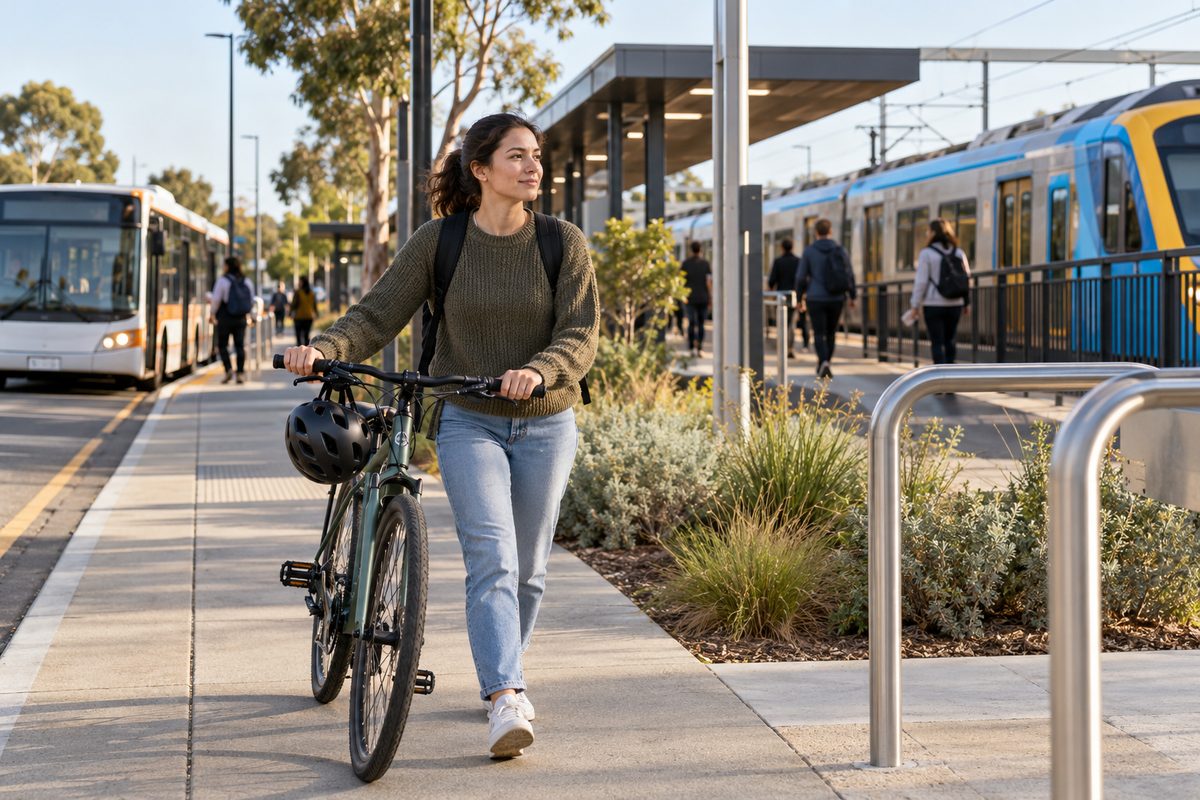
You can live well in Werribee without a car if you treat a bike as your main vehicle, the train as your long range tool, and buses as backup. Most people do it the other way around. They plan everything around bus timetables, get stuck waiting, and give up after two weeks. In my experience, the people who succeed at getting around werribee without a car build a simple system first, then fill the gaps.
This article covers that system. It shows you how to plan a week, where the weak spots are, and why going car free changes your body and your budget in ways most people never measure.
What is the real backbone of car free life in Werribee?
The backbone is the Werribee line plus a bike. Everything else is a supplement.
The Werribee line is run by Metro Trains Melbourne and ends at Werribee railway station. Trains run to Flinders Street in roughly 40 to 45 minutes, with frequent services in peak hours. That covers the long trips, like work in the city or appointments in the west.
Short trips are where people fail. A 3 km trip to the shops can take 35 minutes by bus if you miss a connection. The same trip takes about 12 minutes on a bike. What I saw when I mapped my own week was that over 70 percent of my trips were under 5 km. That matches national data, since the Australian Bureau of Statistics census has shown for years that most local trips are short enough to cycle.
So the first principle is simple. Fix the short trips with a bike, and the long trips with the train.
How do the three transport modes fit together?
Each mode has one job. When you mix up the jobs, you waste time.
- Bike for anything under 6 km. Shops, the gym, school runs, Werribee Mercy Hospital, the river.
- Train for anything over 10 km. The city, Footscray, Sunshine, and anywhere on the Geelong line.
- Bus for bad weather, heavy loads, and trips between 6 and 10 km. Buses in the City of Wyndham are run by CDC Victoria, and most routes meet at Werribee railway station.
Public Transport Victoria runs the journey planner and the Myki system for all three. One Myki card covers trains and buses, and a two hour fare covers transfers. I found that this was the single most useful fact for new residents. If you plan your errands inside a two hour window, a bus trip there and back can cost one fare.
Should you choose where you live by station distance?
Yes. This is the first left of center idea, and it saves more money than any other choice.
Most people pick a house by price and size, then work out transport later. When you live without a car, the walk or ride time to a station matters more than an extra bedroom. A home 800 metres from Werribee railway station gives you a train within 10 minutes of walking. A home 4 km out puts you on a bus timetable every time it rains.
Here is how I would rank areas for car free living.
- Inside 1 km of Werribee railway station. Walk to trains, the hospital precinct, Watton Street shops, and the Werribee River.
- Near Wyndham Vale railway station or Tarneit. These stations sit on the Geelong line, run by V/Line, so you get fast trains to Southern Cross and a direct link to Geelong.
- Close to the Federation Trail. You get a safe, flat bike route to Hoppers Crossing, Laverton and beyond.
- Anywhere else. Possible, though you will lean on CDC Victoria buses and need more patience.
The cost math backs this up. The RACV running cost survey puts even small new cars well above ten thousand dollars a year once you add loan costs, fuel, insurance, rego and servicing. Paying a little more rent near a station is still cheaper than owning a car you barely need.
How do you handle shopping without a car?
You batch it around one hub. This is the second idea that most guides miss.
People without cars often shop like car owners, with one huge weekly trip. That fails, because you cannot carry it. When I tried smaller, more frequent shops, the problem went away.
Pacific Werribee in Hoppers Crossing is the biggest shopping hub in the area. It has supermarkets, a pharmacy, department stores and food. Several CDC Victoria bus routes run there from Werribee railway station, and it is a short ride from the Federation Trail.
A simple shopping system looks like this.
- Two small shops a week by bike with a rear rack and two pannier bags. Each bag holds about 20 litres.
- One bigger shop a month by grocery delivery for heavy items like rice, laundry liquid and drinks.
- Local top ups on foot from shops in central Werribee.
I found that this was cheaper too. When you carry everything yourself, you stop buying things you do not need. Research on grocery shoppers backs this up, since people who walk or ride to the shops spend less per trip and shop more often, while spending about the same or more per month in total at local stores.
Is cycling in Werribee safe and practical?
It is practical if you use the trails and avoid the main arterial roads. Werribee is flat, which removes the biggest barrier most people have.
The Federation Trail is the main off road route. It runs from Werribee northeast through Hoppers Crossing, Williams Landing and Laverton toward Brooklyn, mostly away from traffic. For commuters heading to the eastern side of Wyndham, it is the safest option.
The Werribee River Trail follows the Werribee River through town. It links the station area, parks along the river, and heads south toward the Werribee South area. It works for daily riding and for weekend trips.
What I saw was that most people who stop cycling stop because of one bad road crossing, not the whole route. Spend one Saturday riding your regular trips slowly. Find the quiet streets. Once you have a route you trust, you will ride it without thinking.
A few things make it easier.
- Get a bike with a rack, mudguards and lights. Comfort beats speed for daily use.
- Lock your bike at the station bike cage. Parkiteer cages at major stations need a registered access card.
- Consider an electric bike if you live more than 5 km from where you need to go. It turns a 25 minute ride into a 15 minute ride with no sweat.
How do you get to the hospital and appointments?
Werribee Mercy Hospital sits on Hoppers Lane, about 2 km west of Werribee railway station. You can walk it in about 25 minutes, ride it in 8, or take a CDC Victoria bus that stops near the main entrance.
For planned appointments, ride or walk. For days when you feel unwell, take the bus or a rideshare. Do not try to cycle to an appointment when you are sick or injured. A rideshare once in a while is part of a car free system, not a failure of it.
When I tracked costs for people living without a car, the ones who used rideshare a few times a month still spent a small fraction of what car owners spent. Budget for it and stop feeling guilty about it.
What about weekends and getting out of town?
Weekends are easier than people expect, because you have more time and you are not rushing.
Werribee Park, with the Mansion, the gardens and the open range zoo next door, sits south of the town centre. The ride there along the Werribee River Trail and quiet roads takes about 30 minutes from the station area. Buses run there too, though they are less frequent on weekends, so check Public Transport Victoria before you leave.
For longer trips, the train is the tool.
- Melbourne city on the Werribee line from Werribee railway station.
- Geelong and the Surf Coast on the Geelong line from Wyndham Vale railway station or Tarneit.
- Bayside beaches by changing at Newport or Footscray.
You can take a bike on Metro trains outside peak times at no extra cost. That opens up trail riding across the whole west of Melbourne without a car rack or parking fee.
Why does going car free change your health so much?
Because it adds movement you do not have to schedule. This is the third left of center idea. Most people see car free life as a sacrifice. I see it as the easiest fitness program you will ever run.
Here is what the research shows.
- Public transport users walk more. A study in the American Journal of Preventive Medicine found that people who use public transport walk a median of 19 minutes a day just getting to and from stops. That alone covers most of the 150 minutes of weekly activity that health guidelines recommend.
- Cycling commuters live longer. A large UK study of over 260,000 people, published in the BMJ in 2017, found that cycling to work was linked to a 41 percent lower risk of death from any cause compared with driving or taking transit.
- Morning light sets your body clock. Walking or riding outside in the morning gets light into your eyes early in the day. That helps set your sleep and wake rhythm, raises daytime alertness, and makes it easier to fall asleep at night. In a car, the windscreen and tinted glass cut a lot of that light.
In my experience, people who switch to riding for errands drop resting heart rate and sleep better within a few weeks, without changing anything else. Most of that riding sits in the low intensity zone where you can still talk. That kind of steady movement builds the base fitness that supports your heart and metabolism.
The so what is simple. If you drive, you have to find time for exercise. If you ride and walk to get around, the exercise is already done by dinner.
What does a simple car free week look like?
Here is a template that works for most people living near the town centre.
- Monday to Friday commute. Walk or ride to Werribee railway station, train to work, walk the last stretch. That is 20 to 40 minutes of movement a day.
- Tuesday evening. Small grocery shop by bike on the way home.
- Thursday. Bus or ride to Pacific Werribee for anything you cannot get locally.
- Saturday morning. A long, easy ride on the Federation Trail or the Werribee River Trail. Get outside early for the light.
- Sunday. Train trip or a ride to Werribee Park. Order a delivery for heavy items.
- Backup plan. Rideshare or a car share booking for one off big trips, like moving furniture.
Keep the Public Transport Victoria app on your phone for live times. Real time data saves more waiting than any timetable you memorise.
What are the real weak spots?
Be honest about these, and plan around them instead of pretending they do not exist.
- Late nights. Bus services drop off in the evening. If you work late shifts, ride or plan for a rideshare home.
- Newer estates. Growth areas on the edge of the City of Wyndham often have fewer bus routes and long walks to stops. Check bus access before you sign a lease.
- Heavy rain and heat. Melbourne weather changes fast. Keep a rain jacket on your bike and use buses on the worst days.
- Kids and sports. Carrying children and gear is harder. A cargo bike or a child seat solves much of it for short trips.
None of these are deal breakers. They just mean you need a plan B ready before you need it.
Where should you start this week?
Start with one change, not ten. Pick your most common short trip and do it by bike for two weeks. Track the time. Most people find it takes the same time as driving once you count parking.
Then add the train for your longest regular trip. Then sort out shopping. Within a month, you will have a system that runs without much thought, costs less than a car, and gives you more daily movement than most gym members get.
Public transport in Werribee is not perfect. It does not need to be. When you build your week around a bike and the train, the gaps get small enough to fill with a bus ride or the occasional rideshare.