Werribee Transport and Train Station Guide
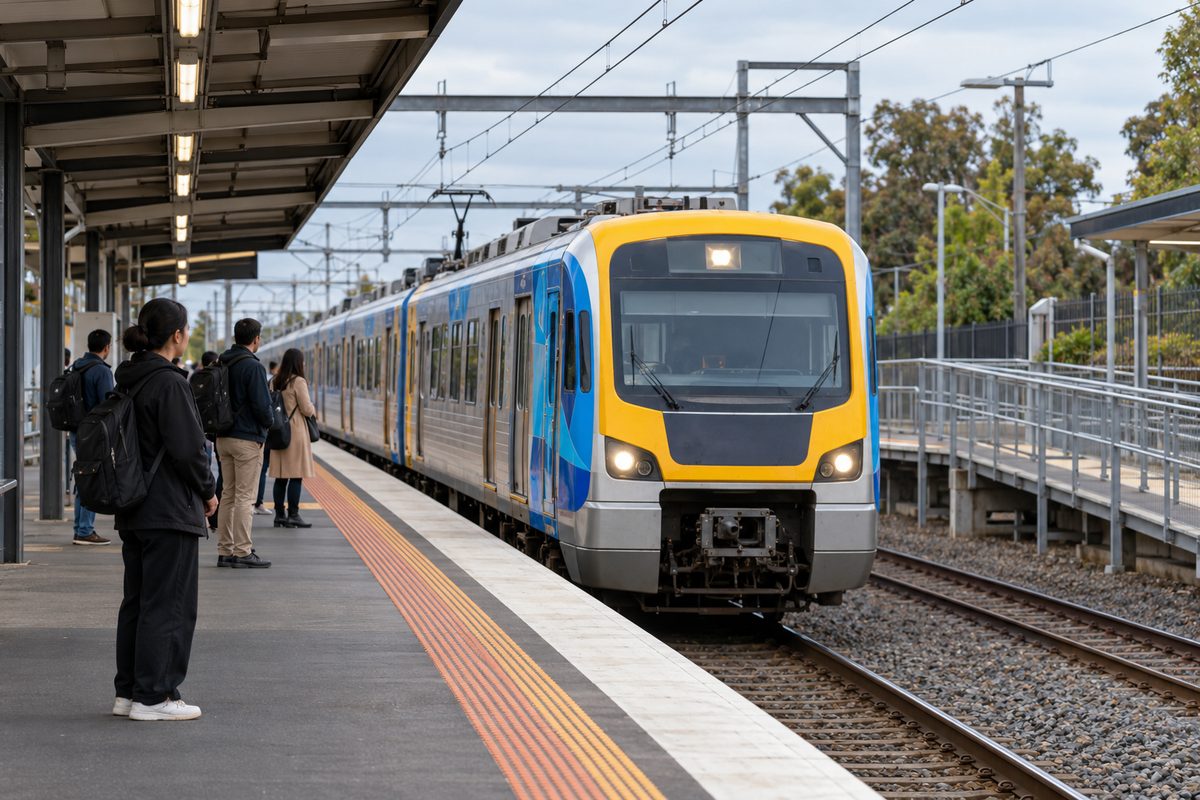
For most trips, take the Werribee line from Werribee railway station to the city. It takes about 35 to 50 minutes. If you live in the newer western estates, Tarneit or Wyndham Vale on V/Line often gets you to Southern Cross faster. Which one wins depends on where you live, the time of day and how far you have to walk to the platform. I wrote this werribee transport and train station guide so you can pick the right station and train and get there in the best state. I care about the commute as more than travel time. It's also your daily walking, your morning light and how your stress levels look by 9am.
Which train line actually serves Werribee?
Two lines serve the area. They're run by different operators and they finish at different city stations.
- The Werribee line is a Metro Trains line. It runs from Werribee railway station through Hoppers Crossing, Williams Landing, Laverton, Newport and Footscray, then on to Southern Cross and Flinders Street railway station.
- The Geelong line on V/Line stops at Wyndham Vale railway station and Tarneit railway station. These stations opened in 2015 with the Regional Rail Link. These trains run express to Footscray and Southern Cross and skip the Metro stops in between.
Public Transport Victoria sets the fares and timetables for both, so one Myki card covers either one. In my experience, people who move to Werribee assume the Werribee line is their only choice. It isn't. Look at a map before you commit to a daily routine.
How long does the Werribee line take to reach the city?
Allow about 35 minutes from Werribee to Southern Cross on a fast train and up to 50 minutes on a slow one. Flinders Street adds a few more minutes on the City Loop or the direct run.
Travel time changes because of one stretch of track. Between Newport and Laverton, some trains take the direct line and skip three stops. Other trains go around the Altona loop and stop at Seaholme, Altona and Westona. The loop trains take longer.
- Check the destination screen and the timetable for "via Altona" before you board.
- Peak hour has more of the faster direct trains.
- Off peak and weekend trains run less often, so plan around the timetable and don't just turn up.
What I saw was that people blamed the whole line for being slow when they just kept catching the loop trains. Pick the right train and you save 5 to 10 minutes each way. Over a working year that adds up to more than 60 hours.
Should you use Tarneit or Wyndham Vale instead of Werribee station?
Yes, if you live in Tarneit, Wyndham Vale, Manor Lakes or the newer northern estates. V/Line trains from Tarneit railway station often reach Southern Cross in about 25 to 30 minutes. That beats the Werribee line because the train skips most stops.
Here's my first left of center idea. Choose your station by the walk, not only by train speed. A station that's 12 minutes on foot can beat a faster train you have to drive to. The walk gives you movement and outdoor light before your day starts. It also takes away the stress of finding a parking spot.
There are some trade offs with V/Line.
- V/Line trains finish at Southern Cross. If you work near Flinders Street, add a tram ride or a short walk.
- Peak trains fill up with people coming from Geelong, so you may have to stand.
- Car parks at Tarneit and Wyndham Vale fill early on weekdays.
When I tried both routes at the same hour, Tarneit won on train time. Werribee won once I counted parking time. Test both for one week each and time the trip from your front door to your desk.
How do fares and Myki work for Werribee?
Use a Myki card or a phone with Myki loaded on it. Werribee is in Zone 2. Since 2015, a trip across Zone 1 and Zone 2 costs the same as a Zone 1 fare, so living out west doesn't cost you more on the train.
- Touch on at the start of your trip and touch off at the end.
- A 2 hour fare covers changes between trains, trams and buses inside that window.
- There's a daily cap, so extra trips after you hit it are free.
- V/Line trips between Tarneit or Wyndham Vale and the city use the same Myki fare system.
Check the current prices on the Public Transport Victoria website before you top up, because fares change each January.
How do buses connect to Werribee railway station?
Werribee railway station has a bus interchange right next to the platforms. Local routes run from there to Hoppers Crossing, Tarneit, Point Cook, Werribee South and Wyndham Vale. Several routes stop at Pacific Werribee, the big shopping centre on the Hoppers Crossing side. It's a quick bus trip if you don't want to drive there on a Saturday.
I found that buses work well for commuters if you time them with the train. A bus that drops you 2 minutes before your train departs just costs you the train. Look for a bus that gets you there 6 to 8 minutes early. Use the live times in the Public Transport Victoria app, not the printed timetable, because buses get held up in school and shopping centre traffic.
How do you get to Werribee Park and Werribee Open Range Zoo without a car?
Take the train to Werribee railway station, then catch the local bus toward Werribee South. It stops near the entrance shared by Werribee Park and Werribee Open Range Zoo. The bus trip takes about 15 minutes.
- Check the bus times before you leave home. This route runs less often than city routes, mainly on weekends and public holidays.
- Plan your return trip before you go in. Missing the last bus means a long wait or a taxi.
- Fit people can ride a bike from the station in about 25 to 30 minutes on flat roads.
In my experience, families who drive there sit in queues on school holiday mornings and the train and bus group walks straight in. The zoo involves lots of walking anyway, so adding the train trip doesn't wear kids out much more.
Can you walk or ride from the station to the Werribee River?
Yes. The Werribee River sits a few minutes walk from Werribee railway station. The Werribee River Trail follows the water through the middle of town and links parks, playgrounds and the shopping strip. Werribee station has secure bike cages, so you can ride to the train, lock your bike and ride home along the river.
Here's my second left of center idea. Use the river trail as part of your commute, not just your weekend walk. Get off one stop early or park further away and walk the trail to the station. You get 10 to 20 minutes of walking in green space before you sit down for 40 minutes. Studies on time in nature show lower stress hormones and better mood after short walks near water and trees.
Our separate river walking guide covers the full trail. For transport, all you need to know is that the station and the river trail sit very close together, so you can link them easily.
Why does public transport help your health more than driving?
Public transport users walk more each day without planning it. That walking adds up to real health gains. Driving door to door takes those steps away.
Here's what the research says.
- Transit users walk more. A study in the American Journal of Preventive Medicine (Besser and Dannenberg, 2005) found people who use public transport walk a median of 19 minutes a day just getting to and from stops. About 29 percent got 30 minutes or more from transit alone. That's the full daily activity target without going to a gym.
- Train commuters carry less body fat. A UK Biobank study in the BMJ (Flint, Cummins and Sacker, 2014) found people who commuted by public or active transport had lower BMI and lower body fat than car commuters. Results held after the researchers adjusted for income and other factors.
- Morning outdoor light sets your body clock. Light in the first hour after waking helps set your circadian rhythm. That leads to better alertness in the day and earlier sleepiness at night. Even on a cloudy day, outdoor light is many times brighter than indoor light.
So here's what that means for you. The walk to Werribee or Tarneit station isn't wasted time. It's your morning light, your steps and a small dose of exercise that a car commute takes away. When I tried leaving the car at home for a month, I noticed I fell asleep earlier and felt less flat in the afternoon. Morning light and steady walking are the two habits the research supports most strongly here.
How should you use the 40 minutes on the train?
Use it on purpose. Don't spend it scrolling, because that cranks up mental load before work even starts.
- First 10 minutes. Look out the window into the distance. Wide, relaxed vision lowers your alertness level and calms you after the rush to the platform.
- Middle 20 minutes. Do focused work, like reading, planning your day or learning something. A seated train trip is a good block of time for deep focus with no other demands.
- Last 10 minutes. Put the phone away and slow your breathing. A long exhale after two short inhales brings stress down fast. Researchers at Stanford tested this "cyclic sighing" in 2023 and it improved mood more than mindfulness meditation in their trial.
On the way home, flip it. Do no work and keep screens off. Let your brain switch off so you arrive home calm and not wired.
Where do you change trains on the way into the city?
Most trips from Werribee need no change at all. The Werribee line runs straight through to the city. Here are the useful interchange points if you're heading somewhere else.
- Laverton railway station, Melbourne is where the direct line and the Altona loop meet. It also has a bus interchange for Point Cook and Altona Meadows.
- Newport railway station, Melbourne is where you change for the Williamstown line. Use it to get to Williamstown beaches and the waterfront.
- Footscray links Metro and V/Line trains. It also connects to the Sunbury line and to trams heading toward the inner west.
- Southern Cross is the end of the line for V/Line trains and has regional coaches and the SkyBus to the airport.
- Flinders Street railway station puts you next to trams across the CBD. Trams inside the city grid are free.
What time of day should you travel?
Travel just before or just after the main peak if your job lets you. Trains in the busiest 45 minutes are the most crowded and the least comfortable.
Here's my third left of center idea. Shift your start time by 30 minutes and you'll do more for your energy than any coffee. An earlier train means more seats, an easier walk and morning light at a better time for your body clock. A later train lets you exercise first. Either way beats squeezing into the busiest train.
A few more tips from riding the line often.
- Stand near the middle of the platform. The end carriages fill first at most stops.
- Check the Public Transport Victoria app for planned works before weekends. Track works often replace trains with buses on Rail transport lines in the west.
- Late at night, sit in the carriage closest to the driver and use stations with staff and CCTV.
What's the simplest weekly plan for getting around Werribee?
Set your routine once, test it for a week and then stop thinking about it.
- Pick your station by your walking distance first, then by train time.
- Load Myki on your phone and set up auto top up.
- Save your usual trains in the Public Transport Victoria app with alerts turned on.
- Walk or ride to the station at least three days a week for light and steps.
- Use the train trip for focused work going in and screen free rest coming home.
- On weekends, take the train and bus to Werribee Park or the zoo, or walk the river from the station.
Public transport out here works well when you plan around it. Choose the right station, catch the faster trains and treat the walk as part of your health routine. You'll get to the city faster and feel better when you arrive.