Point Cook and Werribee Day Trip Guide
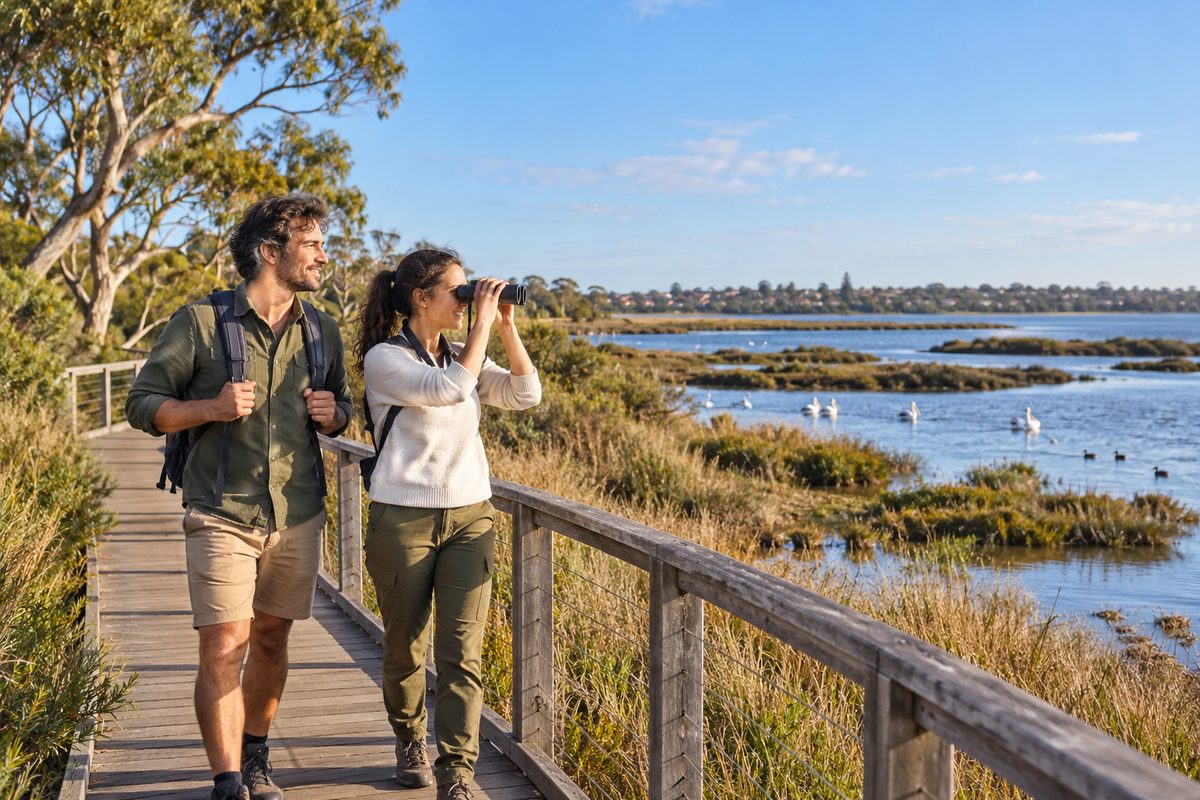
The best way to do Point Cook and Werribee in one day is to start at the coast in Point Cook in the morning, move inland to Werribee for animals and gardens at midday, and finish on the water at Werribee South. That order follows the wind, the birds and the crowds. Both suburbs sit in the City of Wyndham, about 25 to 35 km southwest of Melbourne, and they are only a 15 to 20 minute drive apart. Most people do them as two separate trips. I think that wastes a good day, because the two places fit together better than they work alone.
This point cook and werribee day trip guide is for people who want to see planes, birds, wild animals and the bay in one loop, without driving back and forth across the west.
Why should Point Cook come before Werribee?
Point Cook should come first because the coast is at its best early, and the zoo is at its best when you already have energy to spare for walking.
Here is what I saw when I ran this loop both ways. Going zoo first meant I reached Point Cook Coastal Park around 3pm. By then the sea breeze had picked up off Port Phillip, the light was flat, and the birds had spread out. When I flipped it and hit the coast at 8am, the water was calm, the light was soft and the shorebirds were packed close to the shore.
There is also a body reason. Getting outside light in the first hour or two after waking helps set your body clock, and it lifts alertness for the rest of the day. A slow coastal walk at 8am does that job far better than a car seat. So the morning walk is not just scenery. It is fuel for the afternoon.
- Morning in Point Cook means calm water, low sun and active birds.
- Midday in Werribee means the animals and gardens are open and fully staffed.
- Late afternoon in Werribee South means a sunset over the bay on your drive home.
What is there to see at Point Cook Coastal Park?
Point Cook Coastal Park gives you open beach, salt marsh, an old homestead and some of the best bird watching close to Melbourne. Parks Victoria manages it, and entry is free.
The park sits right on Port Phillip. You can walk the shore, look out over the Point Cook Marine Sanctuary and see the old Point Cook Homestead buildings, which date back to the 1850s. Bring water, because shade is thin.
Right next door are the Cheetham Wetlands. These were once salt evaporation ponds. Now they are shallow lagoons that pull in waders and waterbirds, and there are walking tracks and a bird hide. In my experience, this is the part most visitors skip, and it is the part I would least want to miss.
When are the birds easiest to see?
Shorebirds are easiest to see around high tide. When the water covers their feeding mud, they crowd onto higher ground and roost close together. At low tide they scatter across wide flats and you need a scope. I found that checking a tide chart the night before did more for my bird list than any lens upgrade.
Many of the small waders you see from spring to autumn fly in from the far north of Asia each year. If you visit between October and March, you have the best shot at big flocks.
Is the RAAF Museum worth the stop?
Yes. The RAAF Museum is free, it sits on a working air base, and it holds one of the largest collections of military aircraft in the country.
The museum is at RAAF Williams in Point Cook. This airfield is where military flying in Australia began in 1914, and it is the birthplace of the Royal Australian Air Force, formed in 1921. You walk through hangars full of real aircraft, from early biplanes to jets.
What I saw was that kids who were bored by signs lit up the second they stood under a real wing. Adults do the same thing, they just hide it better. Give it 90 minutes to two hours.
Opening hours change, and the base is a working defence site, so you will need photo ID at the gate. Check the museum website the week you go for hours and any flying displays.
How do you get from Point Cook to Werribee?
Drive. It takes about 15 to 20 minutes from the RAAF Museum to Werribee Park along Point Cook Road and the freeway.
You can reach the area by train on the Werribee line from Flinders Street. Williams Landing station is closest to Point Cook, and Werribee station is the end of the line. The trip takes around 35 to 40 minutes. The problem is that none of the main stops sit near a station. Point Cook Coastal Park, the RAAF Museum and the zoo all need a bus or a car from the train.
My clear advice is this. If you only have public transport, pick one side. Do Werribee by train and bus, or do Point Cook by train and rideshare. Trying to link both without a car eats half your day in waiting.
What should you do in Werribee once you arrive?
Go straight to the Werribee Park precinct. The zoo, the mansion and the gardens sit side by side on K Road, so you park once and walk.
Werribee Open Range Zoo
Werribee Open Range Zoo is run by Zoos Victoria and is built around open plains, so you see giraffes, rhinos, zebras and lions in large paddocks rather than small cages. The safari bus tour comes with your ticket, and I would book the first tour you can get after lunch.
When I tried walking the trails before the safari, I spent the bus ride tired and half watching. When I did the bus first, I knew where each animal lived and walked straight to the ones I wanted to see up close. Do the bus first.
Your ticket money also goes back into Zoos Victoria conservation work, which is a good reason to choose a zoo over a paid wildlife photo stop.
Werribee Park
Werribee Park is a large estate with an 1870s mansion, formal gardens and the Victoria State Rose Garden. Parks Victoria looks after it. The grounds and rose garden are free to walk. The mansion has a separate entry fee.
The roses peak from late spring into autumn, with the first big bloom around November. In my experience, an hour on the lawns after the zoo gives your legs a rest without ending the day.
The Werribee River
The Werribee River runs right past the park. There are short trails along the bank, and it is a quiet place for a 20 minute walk. I like it as a reset between the busy zoo and the drive south. Walking near moving water, with your eyes taking in a wide view, is one of the simplest ways I know to drop stress after a loud few hours.
Why finish at Werribee South?
Werribee South gives you a beach, a boat ramp and a view west over Port Phillip, so you get the sunset right as the day winds down. It is about 10 minutes from Werribee Park.
On the drive in you pass market gardens that grow a large share of the vegetables sold in Melbourne. Some farms sell produce from roadside stalls. Grab fruit for the drive home.
The beach is calm and shallow, and it suits families. Fish and chips on the foreshore is the classic end to this loop, and I have never seen a reason to change it.
What about the Western Treatment Plant?
The Western Treatment Plant is worth adding only if you care about birds, and you must have a permit before you go.
This is Melbourne Water's sewage treatment site, and it covers about 10,500 hectares between Werribee and the bay. That sounds strange for a day trip. But the treatment ponds and coast form one of the richest bird sites in Australia, with more than 280 species recorded. It is listed as a wetland of international value under the Ramsar Convention.
Here is my left of center take. Most people treat this as an extra. I think a keen birder should treat it as the main event and cut the zoo. You can see a giraffe in many cities. You cannot see thousands of shorebirds, ducks and raptors on one site like this in many places at all.
Apply for the bird watching permit online through Melbourne Water well ahead of time, and stay on the marked roads once inside.
What does the full day look like?
Here is the loop I use. Shift times to match the tide and your own pace.
- 7.30am Leave Melbourne. Drive about 30 minutes to Point Cook.
- 8am Walk Point Cook Coastal Park and the Cheetham Wetlands. Aim to be here near high tide.
- 10am Visit the RAAF Museum at RAAF Williams. Bring photo ID.
- 12pm Drive 15 to 20 minutes to Werribee. Eat lunch near the zoo.
- 1pm Werribee Open Range Zoo. Safari bus first, then walk the trails.
- 3.30pm Werribee Park gardens and a short Werribee River walk.
- 5pm Drive to Werribee South for the beach and dinner by the water.
- Sunset Head home. The drive back to the city takes about 40 minutes.
If you are a birder, swap the zoo block for a Western Treatment Plant session. If you have young kids, cut the coastal walk short and give the RAAF Museum more time.
What mistakes ruin this trip?
The biggest mistake is ignoring the wind. Rain gets the blame, but in my experience a strong westerly off the bay does more damage. It kills bird watching, makes the coast cold even in summer and turns a beach finish into a sandblast.
- Not checking the wind. Look at the forecast for gusts, not just rain. Calm mornings are the rule here, so get to the coast early.
- Not checking the tide. Low tide at the wetlands means distant birds and a long walk for little.
- Forgetting ID. You cannot get into RAAF Williams without it.
- Leaving the permit too late. Western Treatment Plant access needs planning, so apply ahead.
- Doing too much. Five big stops is the limit. Add a sixth and every stop gets rushed.
- Skipping sun protection. Both the coast and the zoo plains have little shade. Pack a hat, sunscreen and plenty of water.
Who is this loop best for?
This loop suits anyone who wants variety in one day without a long drive. It works for families, aviation fans, birders and visitors from overseas with one free day in Melbourne.
What I found is that the trip works because each stop uses a different part of your attention. Birds ask you to be still and patient. Planes ask you to stop and look closely. Big animals ask you to walk and scan wide spaces. The bay at sunset asks nothing at all. Mixing those keeps a long day from feeling long.
Pick your anchor stop based on what you love most, build the rest around the tide and the wind, and keep the car keys handy. That is the whole plan.