Outdoor Activities in Werribee
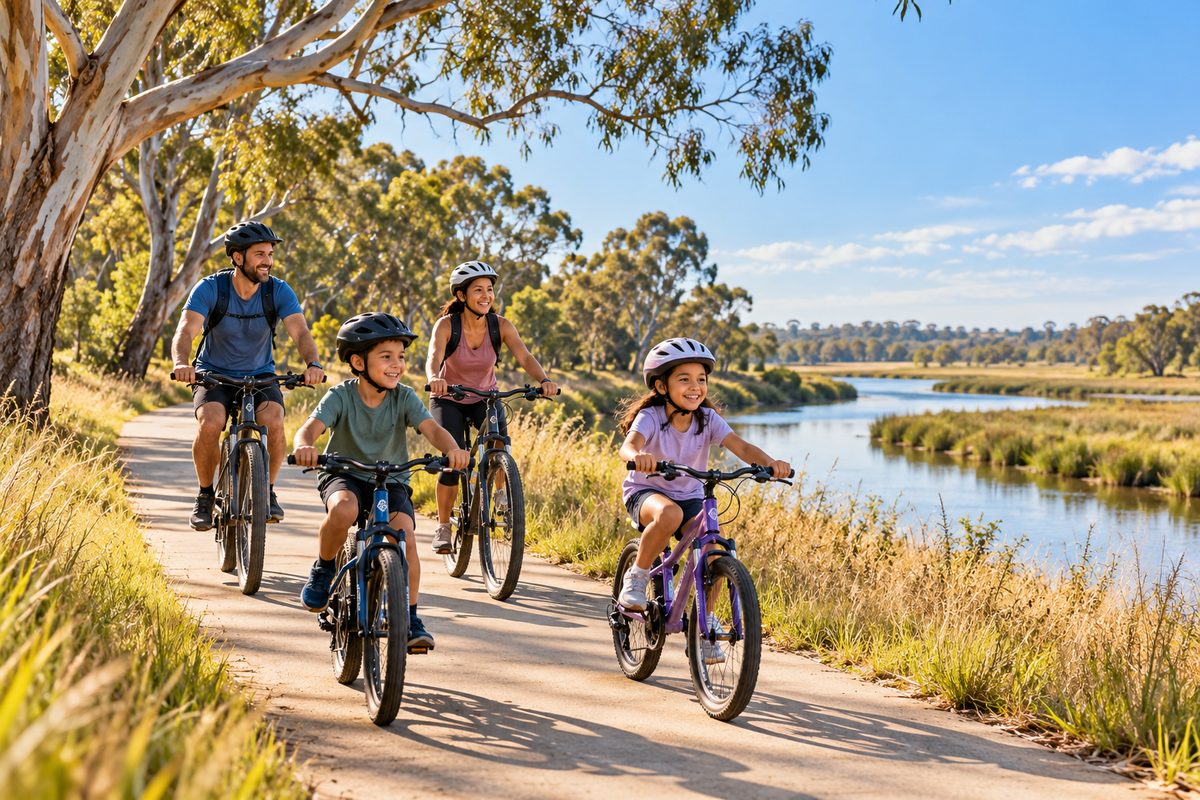
The best outdoor activities in Werribee are dawn birding at the Western Treatment Plant, walking or riding the Werribee River Trail, fishing and swimming at Werribee South, and the safari at Werribee Open Range Zoo. The bigger question is how you choose between them on a given day. In my experience the forecast temperature matters far less than the wind, the tide and the time you leave home. Get those three right and the same place feels completely different.
This guide is for people who want to spend real time outside, and it skips shopping and indoor plans. Werribee sits about 32 km southwest of Melbourne in Victoria (state), Australia, inside the City of Wyndham. It is flat, open, dry and close to the water. Those facts shape everything below.
Why should you plan around wind instead of rain?
Wind ruins more Werribee outings than rain does. Werribee is one of the driest parts of greater Melbourne, with roughly 450 to 500 mm of rain a year according to Bureau of Meteorology records for the area. That is close to half of what falls in the eastern suburbs. So most days are dry enough to go out.
The land is flat basalt plain with few trees, and it faces Port Phillip. Nothing breaks the wind. In summer a sea breeze often builds after lunch and pushes cold air off the bay. What I saw, again and again, was that a calm 8 am walk turned into a hard, gritty slog by 2 pm on the same route.
Here is how I use this.
- Check wind speed first. Under 15 km/h is ideal for birding, paddling and fishing. Over 25 km/h, choose sheltered spots along the river.
- Go early in summer. Mornings are usually calmer before the sea breeze arrives.
- Use the river valley as shelter. The Werribee River cuts below the plain, and the banks block a lot of wind.
- Save the open coast for still days. Point Cook Coastal Park and the Werribee South foreshore have almost no cover.
Is a sewage farm really the best outdoor spot in Werribee?
Yes. The Western Treatment Plant is the most underrated outdoor site in the region, and I would put it first on any list for a curious adult. It treats a large share of Melbourne's sewage, and the shallow lagoons it creates draw huge numbers of birds.
The site covers about 10,500 hectares and is listed under the Ramsar Convention as a wetland of international importance. More than 280 bird species have been recorded there, and BirdLife Australia lists it as a Key Biodiversity Area. In summer, migratory shorebirds arrive from Siberia and Alaska after flying thousands of kilometres. You can watch birds that weigh less than a phone and have crossed the planet to feed in Werribee mud.
When I tried it the first time I expected a smell. It barely registered. The lagoons near the bird areas are treated water, and the open air carries most of it away.
What you need to know before you go.
- You need a free access permit from Melbourne Water for most birding areas. Apply ahead of time.
- Bring binoculars. Many birds sit far out on the water.
- Arrive near sunrise. Birds are most active, light is soft and the wind is lower.
- Stay in your car on the tracks where signs say so. The car works as a bird hide, and birds flush less.
- Pack water and food. There are no shops inside.
My left of center take is this. People treat birding as a slow hobby for retirees. I see it as attention training. You scan, you hold focus, you notice small movement. Research on nature exposure suggests this kind of soft, wide attention helps restore the mind after screen work. An hour at the plant does more for my focus than an hour at a gym.
What does the Werribee River Trail actually offer?
The Werribee River Trail is the most useful daily walking and riding route in the area. It follows the Werribee River from the Werribee town centre down toward Werribee South and the bay. It is mostly sealed or compacted gravel, flat and easy for kids, prams and bikes.
I found that the trail works best as a choose your own length route. You can walk 20 minutes or ride for well over an hour. The river valley gives you shade from river red gums and shelter from the wind, which matters on breezy days.
Good ways to use the trail.
- Morning light walk. Get outside within an hour of waking and walk with the sun low in the sky. Bright morning light helps set your body clock, which supports sleep that night. Even on cloudy days outdoor light is far brighter than indoor light.
- Family bike ride. The flat grade suits young riders.
- Wildlife spotting. Look for water birds, and sometimes rakali, a native water rat, near dawn and dusk.
- Link to Werribee Park. The trail passes near the park, so you can add a picnic.
A study by Mathew White and colleagues in Scientific Reports in 2019 surveyed nearly 20,000 people in England. People who spent at least 120 minutes a week in nature reported better health and wellbeing than those who spent none. The benefit did not depend on how you split the time. Two hours spread across a week of short river walks counts. That is the so what. You do not need a big day trip. Regular short visits to a place like this trail add up.
How do you get the most out of Werribee Park outdoors?
Werribee Park is best treated as an outdoor space first and a heritage site second. The grounds around the 1870s mansion include formal gardens, wide lawns and the State Rose Garden, which has thousands of rose bushes. Entry to the grounds and gardens is free.
In my experience the rose garden is worth timing. It peaks from about late October to December and again in autumn. Outside those windows it still looks good, but the blooms are thin.
What works well here.
- Picnic on the lawns after a river walk.
- Walk the gardens in the late afternoon when light is warm and low.
- Let kids run on open grass. The space is large and well kept.
- Pair it with the zoo next door for a full outdoor day.
Is Werribee Open Range Zoo an outdoor activity or a zoo trip?
It is an outdoor activity. Werribee Open Range Zoo covers about 225 hectares of grassland along the Werribee River. The layout copies African savannah, and the main draw is the safari bus that drives you through open paddocks with rhinos, giraffes, zebras and antelope.
What I saw was that most visitors spend too much time near the entrance. The walking trails further out are quieter, and the open plains give you a real sense of distance. Wear sun protection. There is little shade on the plains, and UV in Victoria (state) summers often reaches extreme levels.
Tips that make a real difference.
- Book the first safari of the day. Animals move more in cool morning air.
- Walk the lion and hippo areas after the bus, not before, so you avoid the crowd rush.
- Bring a hat and water even in spring. The plains are exposed.
Where should you go for beach, boating and fishing?
Werribee South is the coastal base. It has a foreshore reserve, a boat ramp, a jetty, a sandy swimming beach locals call South Beach, and access to Port Phillip. On calm days it is one of the easiest places west of Melbourne to launch a small boat or kayak.
Fishing is the standout. Port Phillip has a strong snapper run, usually from around September to December, and boats head out from Werribee South for it. Land based anglers try the jetty and rocks for whiting, flathead and salmon.
Here is what I would do.
- Check the tide and wind. A low tide on a windy day turns the shallow bay choppy fast.
- Fish at first light or at dusk. Fish feed more in low light.
- Check Victorian Fisheries Authority rules. You need a recreational fishing licence, and size and bag limits apply.
- Swim only on calm, warm days and keep kids close. The bay is shallow but conditions change.
On the drive in you pass the Werribee South market garden district. This is one of the largest vegetable growing areas in Victoria, watered by the Werribee Irrigation District. In season some farms sell produce from the gate. A market garden stop on the way home is one of my favourite small rewards after a cold morning on the water.
What about the coast between Werribee and Point Cook?
Point Cook Coastal Park is the best open coastal walk nearby. It sits east of Werribee South along the bay. The park includes Cheetham Wetlands and borders a marine sanctuary, so you get beach, saltmarsh and bird life in one place.
It works as a nature reserve in practice, with quiet tracks, bird hides and very few buildings. I found that it suits people who want the birding feel of the Western Treatment Plant without arranging a permit. Go on a still day. The coast here is fully exposed, and a strong northerly or southerly makes it hard work.
How do you pick the right activity for the day?
Match the place to the conditions. This simple rule fixes most bad outings.
- Calm and clear morning. Western Treatment Plant birding or kayaking from Werribee South.
- Calm afternoon. Point Cook Coastal Park or the South Beach foreshore.
- Windy day. The Werribee River Trail in the sheltered valley, then the gardens at Werribee Park.
- Hot day. Early safari at Werribee Open Range Zoo, then shade by the river.
- Cool overcast day. Long ride on the river trail. Cloud cover still gives you plenty of outdoor light.
A second left of center idea. Most people plan outdoor time around weekends and good weather. I think short, frequent visits beat rare big trips. Ten minutes of morning light and a short walk on four weekdays gives you more total nature time and better sleep effects than one long Saturday. Werribee makes this easy because so much open space sits close to homes.
A third one. Cold and grey days are good outdoor days. Your body works to stay warm, and you still get far more light than you would indoors. When I started going out on the days I used to skip, the places were empty and the birds were still there.
How do you get there and get around?
The Princes Freeway is the main road link. It connects Werribee to Melbourne in the east and Geelong in the southwest, and most sites sit within 15 minutes of the freeway exits. Werribee train station is on the Werribee line from the city, and the trail starts close to the town centre, so you can walk or ride from the train.
For the coast and the Western Treatment Plant, a car or bike is easier. Public transport is thin out toward Werribee South, and distances on the open plain are longer than they look.
What should you bring for any outdoor day here?
- A windproof jacket, even in summer.
- Sun protection, hat and sunglasses. Shade is scarce outside the river valley.
- Water and snacks. Many sites have no shops.
- Binoculars for birds and zoo animals.
- A fishing licence if you plan to fish.
- Sturdy shoes. Some tracks turn muddy after rain.
Outdoor recreation in Werribee rewards people who read the conditions and go early. Pick by wind, go at first light, and use the river when the coast is too rough. Do that and you will get far more out of the same few places than most visitors ever do.