Victoria State Rose Garden Visitor Guide
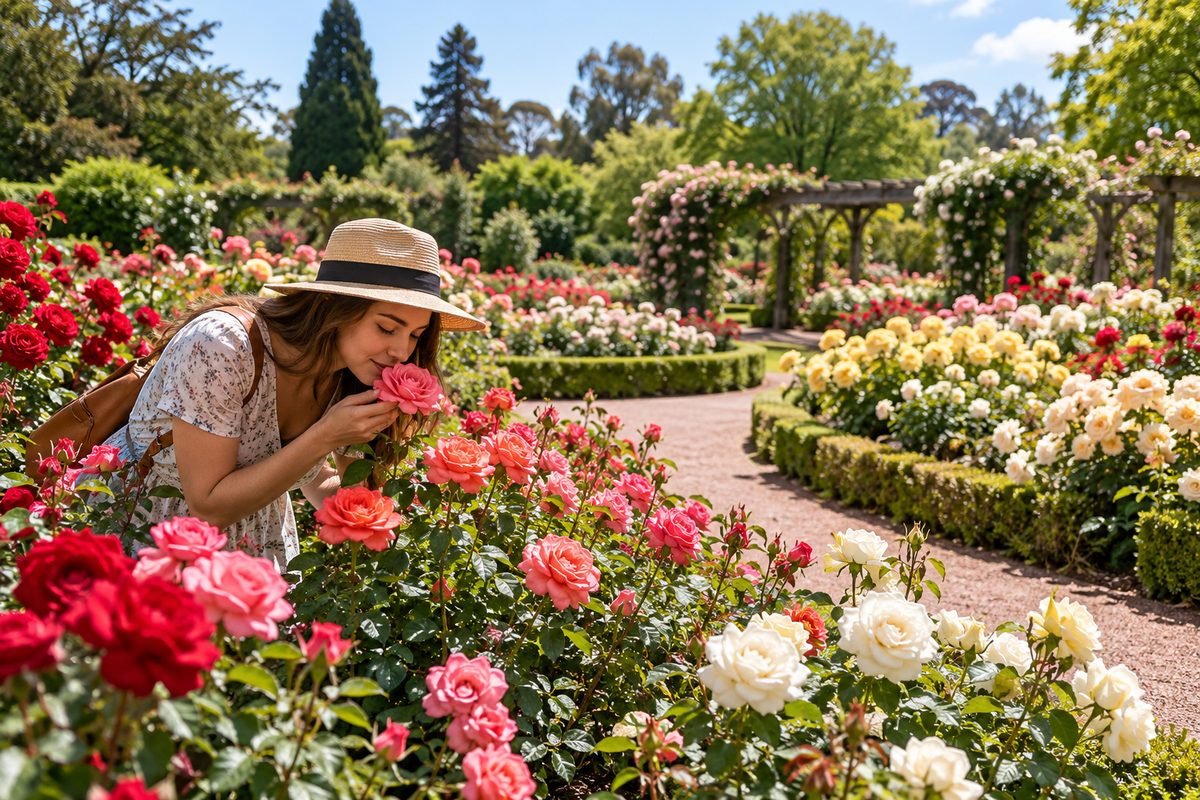
Go in the second or third week of November, arrive before 10am, smell the roses before you photograph them, and give yourself about 90 minutes. That plan beats most visits. The garden sits inside Werribee Park, about 32 km southwest of the Melbourne central business district, and entry is free. It holds more than 5,000 roses planted in the shape of a Tudor rose, so the layout itself tells you how to walk it. Most people show up on a sunny October weekend, snap a few photos and leave. They miss the best part.
This victoria state rose garden visitor guide is about the roses alone. It covers bloom timing, rose types, a route that works and what you can copy for your own garden.
What does the garden look like when you walk in?
The beds form a giant Tudor rose. Picture five large petals around a round centre, with paths running between them. Each petal holds a different group of roses, and the centre pulls you in toward a rotunda style space where the paths meet.
When I first walked it, I made the mistake of walking the outer edge. You see a wall of colour and that's it. What I found was that the layout rewards you for walking the paths between the petals, because that's where you stand close enough to read labels and smell the blooms.
Here's what the garden holds.
- Modern roses. Big beds of Hybrid tea rose and floribunda varieties, grouped by colour.
- English roses. A section of roses bred by David C. H. Austin, known for full, cupped blooms and strong scent.
- Heritage roses. Older types that often flower once a year and carry the deepest fragrance.
- Climbers and pergolas. Roses trained up frames, which give you shade and height.
The point of the layout is simple. You can compare dozens of Garden roses side by side in one walk. That's rare. Most nurseries show you one bush in a pot.
Which week gives you the most flowers?
Mid to late November gives you the most open blooms. The spring flush starts in late October, and many people rush in then, but in my experience the beds look half dressed in the last week of October. By mid November most bushes are in full flower at once.
Roses in Melbourne's climate bloom in waves, called flushes.
- Spring flush runs from late October into early December. This is the biggest show.
- Summer brings smaller repeat blooms. Hot days can scorch petals and shorten flower life.
- Autumn flush runs from March into April. It's smaller than spring, but the colours are often deeper.
- Winter is pruning season. The bushes are cut hard, usually in July, and there's little to see.
Here's my left of centre take. The autumn flush is the better visit for anyone who cares about colour. Research on rose petals shows that cooler temperatures increase the pigments called anthocyanins, which give red, pink and purple roses their colour. Studies on cut roses and garden roses found that high heat lowers these pigments and fades the blooms. So a deep red rose in April often looks richer than the same rose in a hot December week. Fewer people come in autumn too, so you get the paths to yourself.
What I saw was that an overcast autumn morning gave me the best colour of any visit. The petals held their tone and nothing looked washed out.
Why should you smell the roses before you photograph them?
Scent fades faster than colour, so do it first. Many roses release the most fragrance in the morning, as the air warms and before the midday heat. Plant scientists who study rose scent have found that scent release follows a daily rhythm, rising in the morning and dropping later in the day.
There's also a reason smell sticks with you. Your sense of smell runs almost straight to brain areas tied to memory and emotion, the amygdala and hippocampus. Sight and sound take a longer route. That's why one sniff of a rose can bring back a whole afternoon from years ago. When I tried a smell first walk, I remembered far more of the visit later than when I only took photos.
Try this simple method.
- Pick one petal of the Tudor rose layout.
- Walk it slowly and smell five to ten roses.
- Rate each one in your head from weak to strong.
- Write down the names of the best three. The labels are on stakes in the beds.
- Only then pull out your phone for photos.
You'll notice something fast. The most beautiful rose is often not the best smelling one. Many show roses were bred for bloom shape and long stems, and scent got lost along the way. The English roses and heritage roses usually win the smell test.
Does the morning light help too?
Yes. Getting outside in morning daylight helps set your body clock, which makes it easier to feel alert in the day and sleep at night. A rose garden walk before 10am gets you that light, a long slow walk and fresh air in one go. A large study of almost 20,000 people in England found that people who spent at least 120 minutes a week in nature reported better health and wellbeing than those who spent none. A 90 minute rose walk covers most of that in one morning.
How do you tell the main rose types apart?
Look at how the flowers sit on the stem. That one check sorts most roses in seconds.
- Hybrid tea rose. One large, pointed bloom on a long straight stem. This is the classic florist rose. The first one, La France, was bred in France in 1867.
- Floribunda. Clusters of smaller blooms on one stem. These give the most colour per bush and flower again and again.
- English roses. Full, round, cupped blooms packed with petals. David C. H. Austin started breeding these in England in the 1960s by crossing old roses with modern ones. He wanted the scent and shape of old roses with the repeat flowering of modern ones.
- Heritage roses. Older types, many from before 1867. Some flower once a year, and many smell the strongest.
- Climbers. Long, flexible canes trained up frames and arches.
Once you can spot these five, the garden turns into a living catalogue. You stop seeing a blur of pink and start seeing choices.
What route works best inside the rose garden?
Start in the centre, then work out one petal at a time. This beats the edge walk most people do.
- Walk straight to the centre. Stand there for a minute and look back along each petal. You'll see the full Tudor rose shape and pick the bed that looks strongest that day.
- Do the English roses first. Their scent fades as the day warms, so smell them early.
- Move to the heritage beds. Same reason. Fragrance first.
- Walk the Hybrid tea rose and floribunda beds next. These are about colour and form, so they hold up later in the morning.
- Finish under the climbers. You get shade at the end of your walk, and the frames make good photo backdrops.
This takes about 60 to 90 minutes if you stop to read labels. Rushing it in 20 minutes is the most common mistake I see. You see colour, but you learn nothing and smell almost nothing.
Should you go on a sunny day or a cloudy day?
Cloudy. This goes against what most people think. Bright midday sun creates harsh shadows and blows out the colour of white and pale pink roses in photos. A light overcast sky works like a giant softbox and spreads light evenly over the petals. Cooler, cloudy days also keep blooms fresher and scent lingers longer. If the forecast says grey and mild, go.
Who looks after all these roses?
Parks Victoria manages Werribee Park, and volunteers from Victoria State Rose Garden Inc. do much of the hands on rose care. The garden opened in 1986, and volunteer groups have helped keep it going since then.
Volunteers prune, deadhead spent blooms, weed and help keep the plant labels in order. In my experience, if you see volunteers working, ask them a question. They know which roses handle Melbourne's hot, dry spells and which ones get black spot every year. That's advice you won't get from a plant tag.
Victoria State Rose Garden Inc. also takes on new volunteers. If you grow roses at home, a few sessions pruning alongside experienced hands will teach you more than any video. The big winter prune is the best time to learn.
How do you get there and what does it cost?
Drive, and plan for about 35 to 45 minutes from the Melbourne central business district via the Princes Freeway toward Geelong. Take the Werribee exit and follow signs to Werribee Park. The rose garden sits in the park grounds near the mansion.
Entry to the rose garden is free. You only pay if you choose to tour the mansion or visit the nearby Werribee Open Range Zoo.
Public transport works but takes longer. Trains run from the city to Werribee station, and from there you'll need a taxi, rideshare or local bus for the last stretch to the park.
Bring these.
- A hat and sunscreen. There's little shade between the beds.
- A water bottle.
- Comfortable shoes. The paths are gravel and grass in places.
- A small notebook or your phone notes app for rose names.
Check the Parks Victoria website for current opening hours before you go, since gate times can change with the seasons.
What can you copy for your own garden?
Use the visit as free research before you buy a single rose. I found this was the most useful part of every trip.
- Pick roses that look good on the day you visit, not in a catalogue. If a variety looks healthy in a hot November in Werribee, it'll likely cope in your yard.
- Check the leaves, not just the flowers. Clean, glossy leaves late in the season mean good disease resistance. Yellow, spotted leaves mean that variety needs spraying.
- Group by colour like the garden does. Mass planting three or five of the same rose looks far better than one of everything.
- Choose scent on purpose. Use your smell walk notes. Many modern roses have little or no fragrance.
- Learn from the pruning. Visit once in July to see how hard the bushes get cut. Most home gardeners prune too lightly.
That's the real value of the place. Five thousand Garden roses growing in the same soil and the same weather is a free test plot.
How do you fit the rose garden into a day at Werribee?
Do the roses first, while it's cool and the scent is strong. Then move on. The Werribee Open Range Zoo sits right next door in the same precinct, and the mansion and wider grounds of Werribee Park are a short walk away.
A simple plan works well.
- Arrive around 9am and walk the rose garden for 90 minutes.
- Grab a coffee or early lunch nearby.
- Spend the afternoon at the zoo or in the mansion.
For more on local places and day plans in Werribee, see The Werribee Ledger.
The short version is this. Go in mid November or early April, go on a mild cloudy morning, smell first and photograph second, and walk from the centre out. You'll see more, remember more and leave with a list of roses worth growing.