Werribee Park Gardens Visitor Guide
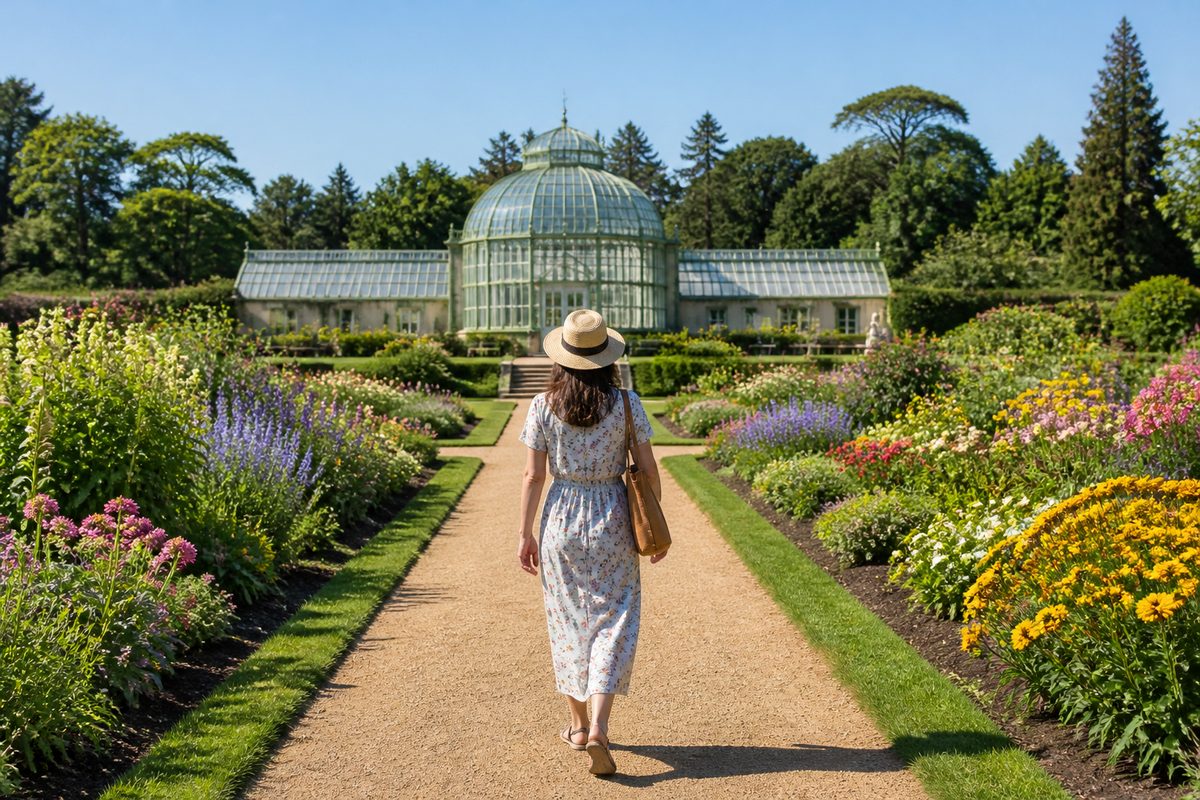
The best way to see Werribee Park is to arrive early, walk the gardens before the mansion, and give yourself at least two unhurried hours outside. Most people do the opposite. They head straight for the house, rush the lawns, and leave tired. This werribee park gardens visitor guide flips that order, and it explains why the outdoor part should come first.
Werribee Park sits on the edge of the Werribee River, about 30 kilometres southwest of Melbourne in Victoria (state). Parks Victoria manages the mansion and the formal gardens. The site shares a precinct with Werribee Open Range Zoo, the Mansion Hotel and Spa, and Shadowfax Winery, so one trip covers a lot of ground.
What are you actually walking through?
You are walking through a working example of Victorian era garden design built around a big Italianate mansion. The house was finished in the late 1870s for the Chirnside brothers, Thomas and Andrew Chirnside, who made their money in sheep and land. It has around 60 rooms, a tower, arched windows and stone balustrades. That style is Italianate architecture, and the gardens were laid out to match it.
The gardens follow a simple idea from that time. Near the house you get order. Clipped hedges, gravel paths, flower beds in strict shapes. As you move away, it loosens into lawns, big trees and water. In my experience, once you see that pattern you read the whole place differently, and you stop wandering in circles.
The main parts are these.
- The parterre and formal beds right below the mansion, best viewed from the house steps.
- The Great Lawn, framed by huge old trees, including Moreton Bay fig trees with roots that spread across the grass.
- The ornamental lake and grotto, a cool shaded spot that kids love.
- The Victoria State Rose Garden, a large public rose garden on the western side.
- The river edge, where the estate meets the Werribee River.
Why should you walk the gardens before the mansion?
Because your eyes and your brain work better outside in the morning, and the gardens are emptier then. Light is the reason I push this so hard.
Morning outdoor light, even on a cloudy day, is many times brighter than indoor light. Indoor rooms often sit around 100 to 500 lux. Outside on an overcast morning you can get 10,000 lux or more, and full sun goes far above that. Bright light early in the day helps set your body clock, lifts alertness, and research links it to better sleep that night. When I tried a simple rule on garden trips, outside first and indoors later, I found I left with more energy instead of that flat museum fatigue.
There is a practical side too. Tour groups and families tend to build up through late morning. The lawns and the rose garden feel very different at opening time. You hear birds, not crowds.
So the plan is simple. Arrive near opening, spend the first 90 minutes to two hours outside, then go into the house when the day warms up.
How long should you spend in the gardens?
Plan on two to three hours for the gardens alone if you want to enjoy them, not just tick them off. One hour feels rushed.
There is a good reason for the longer stay. A 2019 study in Frontiers in Psychology by MaryCarol Hunter and colleagues tracked people who spent time in nature. Stress hormone levels dropped the most when people stayed 20 to 30 minutes, and the benefit kept going after that, just more slowly. A 2015 study by Gregory Bratman at Stanford had people walk 90 minutes in a natural setting or along a busy road. The nature group showed less brooding, repeated negative thinking, and lower activity in a brain area tied to that pattern.
What that means for you is clear. A quick lap around the lawn does very little. A long, slow walk does a lot. What I saw over many visits to gardens like this one is that the second hour is better than the first. People slow down, talk more, and notice more.
When is the rose garden at its best?
Go between November and April, and aim for the first big flush in late spring, usually November. That is when the most bushes bloom at once.
The Victoria State Rose Garden holds thousands of rose bushes, set out in beds that form the shape of a Tudor rose when seen from above. Volunteers help care for it. Roses then keep flowering in waves through summer and into autumn, with a second strong show often around March.
A few tips I found useful.
- Go early for scent. Rose scent comes from oils that drift off faster as the day heats up. Cool mornings hold the smell close to the beds.
- Skip winter if roses are the main goal. Bushes get cut back hard in winter, and the beds look bare.
- Walk the outer rings first. The edges are quieter, and you can then work inward toward the centre beds.
I think most people treat the rose garden as the main event. I see it differently. It is the best part to visit in season, but the trees and the river give the place its feel all year round.
Which trees should you look for?
Look for the Moreton Bay figs on the lawn and the stone pine trees with their flat, umbrella tops. These are the oldest living things on the estate and they shape the whole view.
The Moreton Bay fig comes from eastern Australia. It grows wide and heavy, with big buttress roots that spill across the ground. Please do not climb on the roots. They are shallow and easy to damage, and heavy foot traffic packs the soil down.
The stone pine, Pinus pinea, comes from the Mediterranean. Its rounded canopy suits the Italianate look of the house, and that is not an accident. Victorian era owners often planted trees that matched the style of their buildings. Stone pines also give deep shade, so they are the best spots to rest on hot days.
My suggestion is to stand under one of the big trees for a few minutes and look up. It sounds small. In my experience it is the moment most visitors remember.
How do you plan a route that does not double back?
Start at the river side, loop through the trees and lake, finish at the rose garden, then end at the mansion. That keeps the sun behind you for most of the morning and cuts out wasted walking.
- Park and walk toward the Werribee River edge. Start low and quiet.
- Follow the paths to the lake and grotto. Shade and water early in the day.
- Cross the Great Lawn under the Moreton Bay figs. Take your time here.
- Head to the rose garden. By now the light is good for photos and the beds are warm.
- Finish at the formal beds and the mansion. Go inside as it gets hotter.
When I tried the reverse route, house first, the gardens felt like an afterthought. Doing it this way makes the mansion the reward at the end.
Is the mansion worth going inside?
Yes, if you like history and rooms set up the way people lived in the 1870s. Give it 45 minutes to an hour.
Inside you see the grand staircase, the main living rooms, the billiard room and the service areas where staff worked. It shows the gap between the family upstairs and the workers downstairs very clearly. Check the Parks Victoria website for current opening times, entry costs and any guided tours, because these change through the year.
Where do you eat and rest nearby?
You have three easy choices. Bring a picnic for the lawn, eat at the Mansion Hotel and Spa, or visit Shadowfax Winery next door.
- Picnic. The lawns are made for it. Pack water, a rug and food, and take all your rubbish home.
- Mansion Hotel and Spa. It sits beside the historic house and has a restaurant and bar. It also suits people who want to stay overnight and walk the gardens at first light the next day.
- Shadowfax Winery. It is a short walk or drive within the precinct, with a cellar door and food. It is a good end to a garden day for adults.
One note from experience. If you plan to drink wine, do the long walk first. Alcohol and a hot afternoon on your feet do not mix well, and you will enjoy the gardens more sober and fresh.
Can you combine the gardens with the zoo?
Yes, but only if you split the day clearly. Do the gardens in the morning and Werribee Open Range Zoo in the afternoon, or do them on two separate days.
The zoo is right next door and focuses on animals from open grasslands, like giraffes, rhinos and zebras, with a safari bus tour. Both places need a lot of walking. Trying to do both fully in one day wears out most families, and kids get cranky by mid afternoon.
Here is a split that works.
- Morning. Gardens and a short mansion visit.
- Lunch. Picnic on the lawn.
- Afternoon. The zoo, with the safari tour as the main event.
How do you get there and what should you bring?
Driving is easiest. The park is off K Road in Werribee, close to the Princes Freeway, and there is parking on site. If you come by public transport, catch the train to Werribee Station and then take a bus or taxi for the last stretch, because walking from the station is a long way.
If you are coming from Point Cook, the drive is short, and you can link it with a coastal walk at Point Cook Coastal Park on the same day. That pairs well, a garden in the morning and the bay in the afternoon.
Bring these.
- Water. More than you think. The western suburbs get hot and dry in summer.
- A hat and sunscreen. Much of the lawn is open to the sun.
- Comfortable shoes. Paths are gravel in many places.
- A light jacket. Wind can pick up off the plains, even on sunny days.
- A rug or small chair. Sitting under the trees is half the point.
What do most visitors get wrong?
They rush, they come at the wrong time, and they stay indoors too long. Fix those three and the visit changes.
- Arriving late. Midday light is harsh, the crowds are bigger, and roses lose their scent.
- Treating the gardens as a walk to the house. The gardens are the main event most of the year.
- Phones out the whole time. Take your photos, then put it away. Attention is what makes nature time work. The studies above measured people walking, not scrolling.
- Skipping the river edge. It is the quietest part of the estate and most people never reach it.
- Coming only for roses in winter. Visit in winter for the trees and the quiet, not for flowers.
My overall view is this. Werribee Park works best as a slow outdoor morning, not a sightseeing checklist. Get there early, get bright light, walk for two hours, sit under a big tree, then go inside. You will see more, and you will leave feeling better than when you arrived.