Werribee South Beach Day Guide
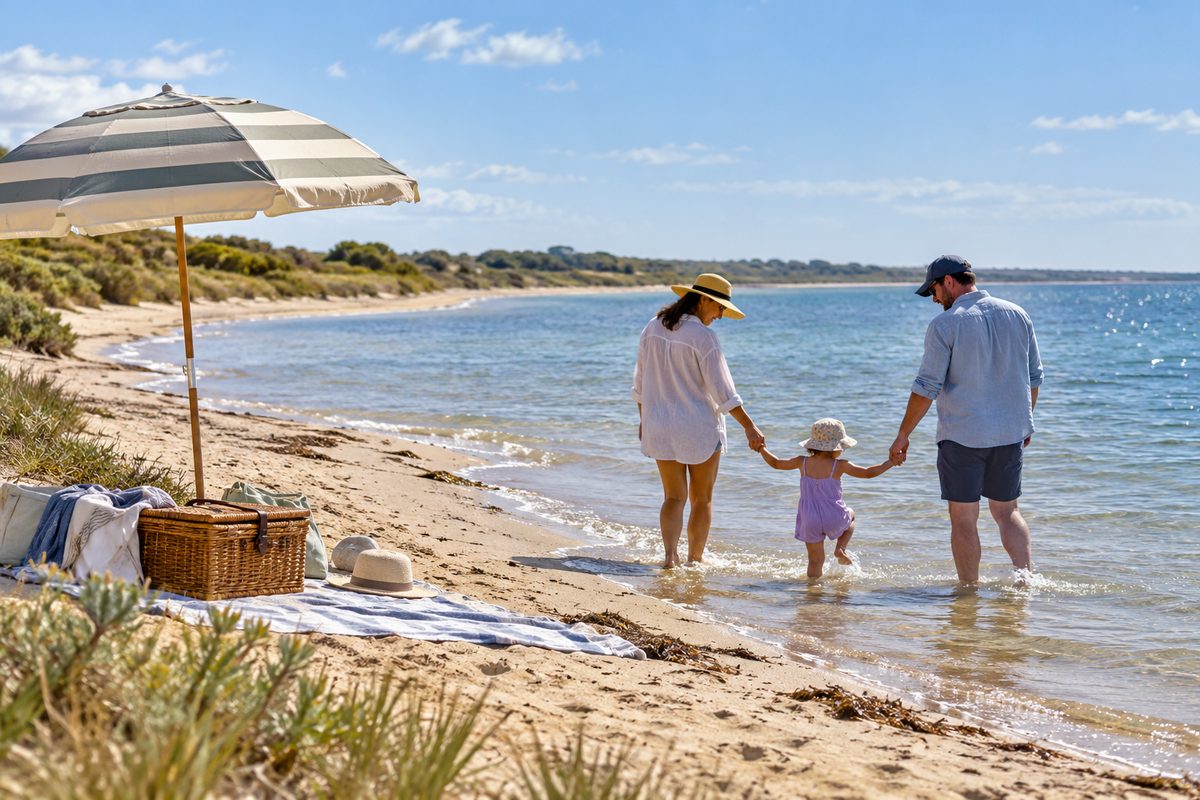
The best Werribee South beach day starts early, on a calm morning, at least two dry days after heavy rain, with the tide and wind checked before you leave home. If you get those three things right, the rest of the day mostly sorts itself out. This werribee south beach day guide shows you how to plan around the water instead of the clock, because the bay decides what kind of day you get.
Werribee South sits on the western shore of Port Phillip in the City of Wyndham, about 35 to 40 km southwest of the Melbourne central business district. The drive takes around 40 to 50 minutes outside peak hour. The beach is shallow, calm and family friendly, and it has a boat ramp, a marina, a grassy foreshore and fishing ground close to shore.
When should you actually go?
Go on a weekday morning between roughly 7am and 11am, on a day with forecast wind under 15 knots. That is the window where the water is flattest, the car park is quiet, and the sun is gentler on your skin.
In my experience, most people pick the hottest day of the year and arrive at 1pm. What I saw was that by then the sea breeze has kicked in, the water is choppy, and the shade is gone. Port Phillip runs a daily wind cycle in summer. The land heats up, warm air rises, and cooler air from the bay rushes in to replace it. The Bureau of Meteorology describes this sea breeze pattern across Melbourne, and it often arrives in the early afternoon and can push winds past 20 knots on the western shore.
There is a second reason to go early. Morning light is good for you. I get outside in the first hour or two after waking because bright morning light helps set your body clock, and that tends to improve sleep that night. A beach walk at 8am does this better than any indoor routine, and you get it almost free.
- Check the Bureau of Meteorology wind forecast the night before.
- Pick a day with wind under 15 knots before noon.
- Arrive before 9am in summer to get parking near the foreshore.
- Plan to leave the water by early afternoon when the breeze builds.
How do you know if the water is safe for swimming?
Look at rainfall from the last 48 hours, not the weather on the day you go. Water quality in Port Phillip drops after heavy rain, and that is the single biggest factor most visitors ignore.
EPA Victoria monitors beaches around the bay during summer through its Beach Report, and Werribee South is one of the sites it tests. The EPA advises people to avoid swimming for 24 to 48 hours after heavy rain. Why? Rain washes stormwater, animal waste and runoff from streets and farms into drains and rivers, and those flow straight into the bay. The Werribee River enters the bay right at Werribee South, so after a big storm the water near the river mouth carries more of that runoff.
When I tried checking the EPA forecast before every trip, I found that a sunny, still day two days after a storm often still had a poor rating. A grey, mild day after a dry week usually scored well. So the so what is simple. A good looking day can still have bad water.
- Open the EPA Victoria Beach Report on the morning you go.
- Check whether it rained heavily in the past two days.
- If the rating is poor, walk, fish or picnic instead of swimming.
- Swim away from the river mouth and stormwater drains after any rain.
What should you expect from the beach itself?
Expect a shallow, gently sloping beach with calm water, coarse sand, and patches of seagrass. It is not a surf beach, and that suits small kids well.
The water stays shallow a long way out. On a low tide you can walk a good distance before it reaches your waist. That warms the water faster in summer and makes it easy to supervise children. The tradeoff is that at low tide you may need to walk out to get a proper swim, so check the tide times for Port Phillip before you go.
The seagrass is a good sign, not a bad one. Seagrass beds are nursery habitat for many fish in the bay, including King George whiting, according to Victorian Fisheries Authority research. Weed can wash up after strong winds, and some people see that as a dirty beach. In my experience, it just tells you the bay is alive.
What facilities are there?
The foreshore has a public toilet block, barbecues, picnic tables, grassy areas and a playground. Shade is limited, so bring your own shade tent or umbrella. Parking is free along the foreshore and near the boat ramp, but it fills fast on hot weekends.
- Bring a shade tent, because natural shade is scarce on the sand.
- Pack more water than you think you need.
- Use the public toilet near the foreshore before you set up, since lines build at midday.
- Bring a bag for rubbish, because bins overflow on busy days.
How strong is the sun really out there?
The sun is stronger than it feels, because the sea breeze cools your skin while the UV keeps hitting it. That combination is why so many people get burnt at Werribee South on a mild day.
The Cancer Council and SunSmart advise sun protection whenever the UV index is 3 or above. In Victoria, the UV index in summer often reaches 11 or higher, which rates as extreme. Water and pale sand also reflect UV back up at you. What I saw over many beach days was that people protect themselves at noon and forget about 10am, yet UV in summer is already high by mid morning.
- Check the daily UV times on the SunSmart app or the Bureau of Meteorology website.
- Apply SPF 50 sunscreen 20 minutes before you go out.
- Reapply every two hours and after swimming.
- Wear a broad brim hat and a long sleeve rash vest in the water.
Is the fishing worth bringing a rod for?
Yes. Werribee South is one of the better spots on the western side of the bay for King George whiting and Australasian snapper, and you can fish from a boat or try from land near the river mouth.
King George whiting feed over sand patches between seagrass beds, which is exactly what the shallows here offer. They tend to bite best in summer and autumn, often on a rising tide in the early morning or evening. Snapper move into Port Phillip in big numbers in spring and early summer to spawn, and the Victorian Fisheries Authority notes the bay is one of the most important snapper nurseries in the state. That run brings a lot of boats to the Werribee South boat ramp from about October to December.
When I tried fishing here in the middle of the day, I caught almost nothing. I found that this was a timing problem, not a location problem. Fish feed more in low light and on moving water. The quiet hour around dawn on a tide change outperformed a whole afternoon.
- Get a Victorian recreational fishing licence before you fish, unless you are exempt.
- Check current size and bag limits on the Victorian Fisheries Authority website, because they change.
- Fish the hour either side of a tide change, ideally at dawn or dusk.
- Use fresh bait like pipis or squid for whiting.
- Launch early from the boat ramp in snapper season, because the car park fills before sunrise.
What about launching a boat?
The Werribee South boat ramp gets busy on calm spring and summer weekends. Wyndham Harbour, the marina next to the beach, also has launch facilities. Check the wind before you head out. Port Phillip is shallow, so it builds steep, short waves fast when the wind picks up, and small boats can get caught out by an afternoon change. Always check the marine forecast from the Bureau of Meteorology.
What can you add to the day nearby?
Pair the beach with one nearby stop, not three. A beach morning plus one afternoon activity makes a full, relaxed day without a rushed drive.
Werribee Park and the Werribee Open Range Zoo sit about 10 minutes north of the beach, along the Werribee River. That makes them a smart move once the sea breeze arrives in the afternoon. You swap a windy beach for shaded gardens or a safari bus. I think the zoo works best for families with younger kids, and Werribee Park suits a slower walk and picnic.
For bird lovers, the Western Treatment Plant lies just west of Werribee South. It is one of the best bird sites in Australia and is listed as a wetland of international importance under the Ramsar Convention. You need a free birdwatching permit from Melbourne Water to enter. To the east, Point Cook Coastal Park offers quieter beach walks, coastal grassland and bird viewing across Cheetham Wetlands.
- Morning at the beach for a swim, walk or fish.
- Lunch on the foreshore at the barbecues.
- Afternoon at the Werribee Open Range Zoo or Werribee Park when the wind rises.
- Sunset at Point Cook Coastal Park if you want a calm walk on the way home.
Why does treating the beach as a reset day work so well?
Because the simplest version of the day gives you the most benefit. Morning light, cool water, a slow walk and time away from screens do more for most people than a packed itinerary.
Here is my left of center take. Most guides treat Werribee South as a place to hit hard on a hot day. I see it as a place to use on purpose. Brief cold water exposure, like a short dip in the bay in spring, raises alertness and mood for hours afterward, and research on cold water immersion shows a large rise in dopamine and noradrenaline. You do not need an ice bath. A few minutes in 16 to 18 degree water in October or November does the job, and the shallow, calm water here makes that easy and safe for most people.
Second, walking on sand is harder work than walking on a footpath. Studies show walking on sand uses noticeably more energy than walking on firm ground. A 45 minute walk along the shore at low tide gives you real exercise without it feeling like training.
Third, the slow pace is the point. What I found was that people who come with no plan beyond the water leave calmer than people who try to cover the whole area. Pick the beach, check the conditions, and let the bay set the pace.
What should you pack?
Pack for sun, wind and shallow water. That covers almost every problem you will run into.
- SPF 50 sunscreen, a hat and a rash vest.
- A shade tent with sand pegs or weights, since the wind can lift it.
- Water shoes, because the seabed has shells and seagrass.
- A windbreaker or light jacket for the afternoon breeze.
- Plenty of drinking water and food, since shops are limited right on the foreshore.
- A fishing licence and gear if you plan to fish.
- A rubbish bag to take everything home.
What is the simplest plan for a first visit?
Leave the city by 7.30am, arrive before 8.30am, swim or walk until 11am, have a barbecue lunch, then head inland when the wind picks up. That one plan avoids the crowds, the strongest sun and the choppy afternoon water.
Check three things the night before. Look at the wind forecast, the EPA water quality rating, and the tide times. If all three look good, go. If the water rating is poor, keep the trip and skip the swim. A walk, a fish or a picnic still makes it a good day.
Werribee South sits on the western shore of Port Phillip Bay in Victoria (state), which makes it an easy coastal day trip from Melbourne. On a beach day here you can relax on the sand, take a walk along the foreshore, or watch boats heading out from the nearby marina. If you check the weather and pack sun protection before you go, you'll get the most out of this relaxed spot on Victoria (state)'s bayside coast.